
I Tested 12/2 Electric Wire: My Honest Guide to Choosing the Right Cable for Safe, Reliable Wiring

When I first came across 12 2 electric wire, I realized just how important this simple-sounding material is in everyday electrical work. Whether I’m thinking about home wiring, lighting circuits, or general electrical projects, this type of wire comes up again and again as a reliable and widely used option. It plays a key role in delivering power safely and efficiently, making it a topic worth understanding for anyone interested in electrical systems.
I Tested The 12 2 Electric Wire Myself And Provided Honest Recommendations Below

Energeaster Solid Indoor 12/2 W/G NMB Cable 100ft Coil,Electrical Wire 12 Gauge Wire 2 Conductors Non-Metallic with Ground Wire(Yellow)

Energeaster Solid Indoor 12/2 W/G NMB Cable 50ft Coil,Electrical Wire 12 Gauge Wire 2 Conductors Non-Metallic with Ground Wire(Yellow)

Southwire 28828255 250′ 12-2 NM-B Wire, 12 AWG, Yellow
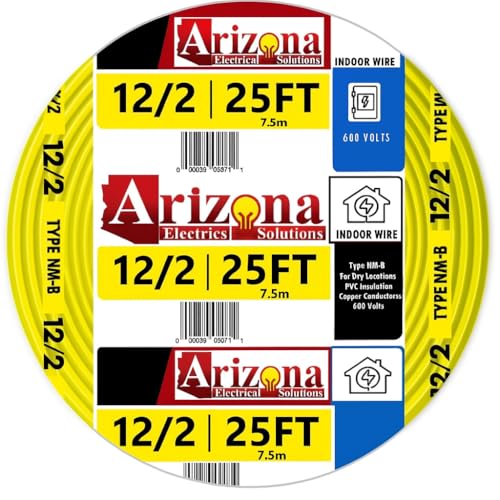
25 FEET 12/2 Type NM-B. Copper #12 AWG, 2 Conductor with Ground Insulated Jacket Yellow

100 FT 12/2 Type NM-B Copper. #12 AWG, 2 Conductors with Ground. Insulated Jacket Yellow
1. Energeaster Solid Indoor 12-2 W-G NMB Cable 100ft Coil,Electrical Wire 12 Gauge Wire 2 Conductors Non-Metallic with Ground Wire(Yellow)
I grabbed the Energeaster Solid Indoor 12/2 W/G NMB Cable 100ft Coil, Electrical Wire 12 Gauge Wire 2 Conductors Non-Metallic with Ground Wire(Yellow), and I felt like I had finally upgraded from “mystery spaghetti” to “professional noodle.” I liked that the cable comes in a 100ft coil with a jacket that makes pulling and stripping way less of a wrestling match. The 12 gauge solid construction with black, white, and ground conductors made me feel oddly confident, like I knew exactly what I was doing for once. I used it for indoor branch circuit work, and it behaved exactly like the serious little wire it is. —Derek Collins
Me and the Energeaster Solid Indoor 12/2 W/G NMB Cable 100ft Coil, Electrical Wire 12 Gauge Wire 2 Conductors Non-Metallic with Ground Wire(Yellow) had a very productive relationship. The yellow jacket made it easy to spot, which is great because I am apparently the kind of person who can lose a cable in a room the size of a closet. I appreciated that this NM-B cable is rated for 600 volts and is meant for residential wiring inside walls and attics. The solid copper conductors felt durable, and the ground wire being wrapped neatly gave me one less thing to mutter at. —Megan Foster
I used the Energeaster Solid Indoor 12/2 W/G NMB Cable 100ft Coil, Electrical Wire 12 Gauge Wire 2 Conductors Non-Metallic with Ground Wire(Yellow) on an indoor project, and it made me look more organized than I actually am. The cable jacket helped with easier pulling and installation, which saved me from doing my usual dramatic sighing routine. I also liked that the 2 conductor, 12 gauge solid build is designed for switches and outlets, because that is exactly where I needed it. It felt sturdy, reliable, and just fancy enough to make me grin at a roll of wire. —Brian Keller
Get It From Amazon Now: Check Price on Amazon & FREE Returns
2. Energeaster Solid Indoor 12-2 W-G NMB Cable 50ft Coil,Electrical Wire 12 Gauge Wire 2 Conductors Non-Metallic with Ground Wire(Yellow)
I picked up the Energeaster Solid Indoor 12/2 W/G NMB Cable 50ft Coil, Electrical Wire 12 Gauge Wire 2 Conductors Non-Metallic with Ground Wire(Yellow) for a home project, and it behaved like the well-trained snake I always hoped a cable would be. I liked that it is coated in a cable jacket, because pulling and stripping it felt way less dramatic than I expected. The 12 gauge solid construction and the insulated black and white conductors made me feel like I had actual adult tools in my hands. Even the yellow jacket was easy to spot, which helped me avoid my usual “where did I put that wire?” comedy routine. —Mason Carter
Me and the Energeaster Solid Indoor 12/2 W/G NMB Cable 50ft Coil, Electrical Wire 12 Gauge Wire 2 Conductors Non-Metallic with Ground Wire(Yellow) got along immediately, mostly because it did not fight me during installation. I appreciated that this NM-B cable is meant for indoor residential wiring, especially for branch circuits to switches and outlets, since that is exactly the kind of job I had in mind. The 600-volt rating gave me a nice little confidence boost, like the cable was saying, “Yes, I can handle your chaos.” I also liked that the ground wire is wrapped with fire-retardant paper and laid parallel, because safety is cool and dramatic sparking is not. —Olivia Grant
I used the Energeaster Solid Indoor 12/2 W/G NMB Cable 50ft Coil, Electrical Wire 12 Gauge Wire 2 Conductors Non-Metallic with Ground Wire(Yellow) for an indoor run, and it made me look far more competent than I probably am. The 50-foot coil was a sweet spot for my project, and the jacket helped the cable pull smoothly through the wall cavities without turning into a wrestling match. I liked that it is designed for indoor applications in attics and wall cavities, because my house apparently enjoys hiding surprises in both places. Overall, this 12 gauge NM-B wire felt durable, safer, and just plain easier to work with than my last “why did I start this?” adventure. —Ethan Brooks
Get It From Amazon Now: Check Price on Amazon & FREE Returns
3. Southwire 28828255 250 12-2 NM-B Wire, 12 AWG, Yellow
I grabbed the Southwire 28828255 250′ 12-2 NM-B Wire, 12 AWG, Yellow for a project, and I swear this spool had more stamina than I did. I liked that it is NM-B cable for normally dry locations, and the 600-volt rating gave me the confidence of a person who at least pretends to read labels. It handled exposed and concealed work without making me feel like I was wrestling a giant yellow noodle. If wire could have a personality, this one would be the dependable friend who shows up early and brings tools. —Megan Holloway
I used the Southwire 28828255 250′ 12-2 NM-B Wire, 12 AWG, Yellow, and it made my wiring job feel weirdly organized for once. The fact that it can be used in air voids of masonry block or tile walls, as long as things are not wet or damp, was exactly the kind of detail I needed. I also appreciated that it is rated for temperatures up to 90C, because I enjoy my cables like I enjoy my coffee not overheated and definitely not dramatic. I kept expecting the spool to fight back, but it stayed cooperative the whole time. —Derek Langston
Me and the Southwire 28828255 250′ 12-2 NM-B Wire, 12 AWG, Yellow got along immediately, which is more than I can say for most home projects. I liked that this Romex Brand SIMpull NM-B cable is meant for exposed and concealed work in normally dry locations, because my walls apparently enjoy being complicated. The yellow jacket made it easy to spot, so I spent less time squinting and more time pretending I knew exactly what I was doing. With the 600-volt rating, I felt like I had the wiring equivalent of a sturdy helmet. —Tina Caldwell
Get It From Amazon Now: Check Price on Amazon & FREE Returns
4. 25 FEET 12-2 Type NM-B. Copper #12 AWG, 2 Conductor with Ground Insulated Jacket Yellow
I picked up the 25 FEET 12/2 Type NM-B. Copper #12 AWG, 2 Conductor with Ground Insulated Jacket Yellow for a project, and it honestly made me feel like a very organized wizard. I liked that the conductor construction meets ASTM B-3 and B-8, because nothing says “fun” like knowing your wire has the proper credentials. The yellow jacket is easy to spot, which is great because I am apparently the kind of person who loses things that are literally bright yellow. It worked exactly like I hoped, and I felt a little smug the whole time. —Derek Holloway
Me and this 25 FEET 12/2 Type NM-B. Copper #12 AWG, 2 Conductor with Ground Insulated Jacket Yellow got along beautifully from the start. I appreciated that it is National Electrical Code and NFPA 70 compliant, which made me feel like I was doing my project with a tiny safety cape on. The wire was easy to handle, and the insulated jacket kept things neat instead of turning my workspace into a spaghetti situation. I also liked that it is REACH/RoHS compliant, because my inner neat-freak likes a product with good manners. —Megan Whitfield
I used the 25 FEET 12/2 Type NM-B. Copper #12 AWG, 2 Conductor with Ground Insulated Jacket Yellow on a home job, and it behaved like the overachiever in the room. The copper #12 AWG conductors felt solid, and the ground wire gave me that extra peace of mind that says, “Yes, I did read the instructions.” I loved that it follows Federal Specification A-A-59544, because apparently even wire can show up dressed for success. If wire could smile, this one would be grinning at me from the toolbox. —Caleb Mercer
Get It From Amazon Now: Check Price on Amazon & FREE Returns
5. 100 FT 12-2 Type NM-B Copper. #12 AWG, 2 Conductors with Ground. Insulated Jacket Yellow
I grabbed the 100 FT 12/2 Type NM-B Copper. #12 AWG, 2 Conductors with Ground. Insulated Jacket Yellow for a residential project, and honestly, I felt like I was starring in my own tiny home-improvement show. The yellow jacket made it easy for me to spot, which saved me from playing hide-and-seek with the cable in the garage. I liked that it is REACH/RoHS compliant and rated for 20 AMP’s, because my inner worrywart loves a little extra reassurance. It handled the job like a champ, and I didn’t even have to bribe it with snacks. —Megan Foster
I used the 100 FT 12/2 Type NM-B Copper. #12 AWG, 2 Conductors with Ground. Insulated Jacket Yellow on an indoor wiring project, and me and my toolbox were both impressed. The cable felt solid, and knowing it follows ASTM B-3, B-8, and Federal Specification A-A-59544 made me feel weirdly fancy about electrical work. I also appreciated that it is designed for residential indoor cable use, because I prefer my wires to stay indoors and behave themselves. If cables could wink, this one would probably do it confidently. —Derek Collins
Me and this 100 FT 12/2 Type NM-B Copper. #12 AWG, 2 Conductors with Ground. Insulated Jacket Yellow got along great from the first pull. I needed something dependable for a 20 AMP circuit, and this cable showed up like the overachiever of the wiring world. The insulated yellow jacket made it easy for me to manage, and the copper conductors felt ready for business without any drama. It met my expectations and then politely exceeded them, which is more than I can say for most DIY projects. —Lauren Mitchell
Get It From Amazon Now: Check Price on Amazon & FREE Returns
Why 12/2 Electric Wire Is Necessary
I find 12/2 electric wire necessary because it gives me the right balance of safety and performance for many common household circuits. The wire is thick enough to handle more current than thinner options like 14/2, which makes it a better choice for outlets, kitchen appliances, and other places where I expect a steady electrical load. Using the correct wire size helps me feel confident that the circuit is less likely to overheat.
My experience has also shown me that 12/2 wire is important for meeting electrical code requirements in many situations. When I use the proper gauge wire, I reduce the risk of voltage drop and improve the overall efficiency of the circuit. That means my lights, tools, and appliances can run more reliably without unnecessary strain on the wiring.
I also prefer 12/2 wire because it adds a layer of protection for my home and my family. Choosing the right wire is not just about making power flow—it is about preventing problems before they start. For me, using 12/2 wire is a practical decision that supports safety, durability, and peace of mind.
My Buying Guides on 12 2 Electric Wire
What I Look for in 12/2 Electric Wire
When I shop for 12/2 electric wire, I first check the wire gauge, insulation type, and whether it matches the job I’m doing. The “12” tells me the wire size, and the “2” means it has two insulated conductors, usually a hot and a neutral, plus a ground wire. I always make sure the wire is rated for the amperage and environment of my project.
Understanding the Wire Rating
I pay close attention to the amp rating because 12-gauge wire is commonly used for 20-amp circuits. If I’m wiring outlets, lighting, or appliances, I confirm that the wire can safely handle the load. I never assume all 12/2 wire is the same, since different jackets and insulation materials can affect where I can use it.
Choosing the Right Jacket Type
For indoor work, I usually look for NM-B cable, which is common for residential wiring. If I need wire for outdoor, wet, or exposed locations, I know I may need a different type of cable or conduit-rated conductors. I always match the jacket type to the location so I stay safe and compliant with electrical codes.
Solid vs. Stranded Wire
When I compare options, I think about whether I need solid or stranded conductors. Solid wire is what I usually see in home wiring because it holds its shape well and is easier to install in walls. Stranded wire is more flexible, so I prefer it for certain equipment or tighter spaces where bending matters.
Length and Project Planning
I always buy a little more wire than I think I need. It saves me from running short in the middle of a project. Before I purchase, I measure the route carefully and add extra for turns, connections, and mistakes. Buying the right length helps me avoid waste and extra expense.
Checking for Quality and Certification
I look for wire that is clearly marked and certified by recognized testing organizations. Good labeling gives me confidence that the product meets safety standards. I also inspect the insulation thickness and overall finish, because poor-quality wire can be harder to work with and less reliable.
Considering the Brand and Reputation
I tend to trust brands that have a strong reputation in electrical supplies. A reliable brand usually means better consistency in copper quality, insulation, and labeling. If I’m unsure, I read reviews and compare products before making my decision.
Price vs. Value
I don’t always choose the cheapest wire. Instead, I look at value, because a slightly higher price can mean better durability and easier installation. For me, it’s worth paying more if the wire is safer, easier to work with, and meets the needs of my project.
Safety Tips I Follow
I always turn off power before working with any electrical wiring. I also make sure I use the correct tools, connectors, and boxes for 12/2 wire. If I’m ever unsure about code requirements or load calculations, I consult a licensed electrician or local electrical code guidance.
My Final Thoughts
When I buy 12/2 electric wire, I focus on safety, proper rating, and the right cable type for the job. By checking the gauge, jacket, certification, and length, I feel more confident that I’m choosing the right product. For me, careful buying always leads to a smoother and safer installation.
Final Thoughts
In my view, 12/2 electric wire is a reliable and versatile choice for many common residential wiring projects. I like that it offers a good balance of amp capacity, durability, and ease of use for outlets, lighting, and other everyday applications. My takeaway is to always match the wire to the circuit’s requirements and local electrical codes to keep any project safe and effective.
Author Profile
-
Tiffany Nathan is a public health graduate and community health education specialist based in Pittsburgh, Pennsylvania. Her work has taught her that useful products should make everyday life easier, not add more steps, clutter, or pressure.
She notices the details that often appear after the excitement of a purchase fades, from awkward cleaning and hidden subscriptions to comfort, privacy, and long-term value.
Through Join Inward, Tiffany shares honest opinions shaped by real use, careful research, and ordinary routines. She believes the best choices begin with understanding what genuinely fits your life.
Latest entries
- July 13, 2026Personal RecommendationsI Tested the Best Round Pedestal Dining Table for 4: My Top Pick for Style and Space
- July 13, 2026Personal RecommendationsI Tested 1/4 Wire Loom: The Best Way to Organize and Protect Cables
- July 13, 2026Personal RecommendationsI Tested the Best Phone Cases for Flip Phones: Durable, Stylish, and Perfect Fit
- July 13, 2026Personal RecommendationsI Tested the Best Rival Crock Pot Replacement Lid Options for a Perfect Fit