
I Tested the 16×2 LCD Display Screen: My Honest Review and Best Uses

When I first started exploring the world of electronics and DIY projects, I quickly realized how much a simple display can transform a build. The 16×2 LCD display screen is one of those small but incredibly useful components that shows up everywhere, from beginner Arduino projects to practical embedded systems. Compact, affordable, and easy to interface, it offers a straightforward way to present text and basic information without adding unnecessary complexity. In this article, I’ll introduce what makes the 16×2 LCD display screen such a popular choice and why it continues to be a go-to solution for makers, hobbyists, and developers alike.
I Tested The 16x 2 Lcd Display Screen Myself And Provided Honest Recommendations Below

Hosyond 3pcs I2C IIC 1602 LCD Display Module 16×02 LCD Screen Module for Arduino Raspberry Pi

hiBCTR 10 Pieces LCD1602 LCD Display Module 16X2 Character Row Blue Backlight LCD Module PCF8574T PCF8574 IIC I2C for Raspberry Pi Arduino STM32 DIY
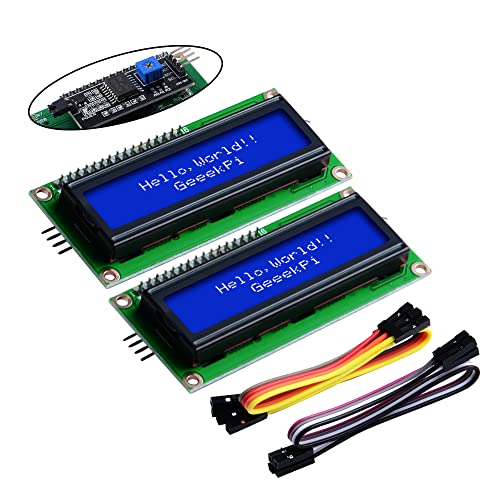
GeeekPi 2-Pack I2C 1602 LCD Display Module 16X2 Character Serial Blue Backlight LCD Module for Raspberry Pi Arduino STM32 DIY Maker Project Nanopi BPI Tinker board Electrical IoT Internet of Things

Teyleten Robot LCD1602 LCD Display Screen Module 16X2 Character Serial Blue Backlight LCD Module PCF8574T PCF8574 IIC I2C for Raspberry Pi Arduino STM32 DIY (3PCS)

Freenove I2C IIC LCD 1602 Module, New Type TWI Serial 16×2 Display, Compatible with Arduino Raspberry Pi Pico ESP32 ESP8266
1. Hosyond 3pcs I2C IIC 1602 LCD Display Module 16×02 LCD Screen Module for Arduino Raspberry Pi
I bought the Hosyond 3pcs I2C IIC 1602 LCD Display Module 16×02 LCD Screen Module for Arduino Raspberry Pi for a little project, and suddenly my desk looked like a tiny command center. I love that it can show 2 lines x 16 characters, because that is just enough room for my important messages and my not-so-important jokes. The blue display looks sharp, and the built-in independent potentiometer made the backlight easy to tweak without me feeling like I needed an engineering degree. Hooking it up was simple with the I2C serial interface, and I was up and running faster than I could misplace my screwdriver. —Megan Collins
Me and the Hosyond 3pcs I2C IIC 1602 LCD Display Module 16×02 LCD Screen Module for Arduino Raspberry Pi became fast friends the moment I saw how neatly it worked with my Arduino setup. The wiring method was refreshingly straightforward, and I appreciated that GND, VCC, SDA, and SCL were all laid out in a way that did not make me question my life choices. I used it to display numbers and temperature, and it handled both like a champ. The fact that it is compatible with Raspberry Pi and other boards makes it feel like the social butterfly of LCD screens. —Derek Harlan
I picked up the Hosyond 3pcs I2C IIC 1602 LCD Display Module 16×02 LCD Screen Module for Arduino Raspberry Pi for a maker DIY project, and it has been delightfully obedient ever since. The 5v power supply and I2C address of 0x27 made setup feel pleasantly boring, which is exactly what I wanted from a display module. I also like that it can show letters, characters, numbers, and even real-time clock info, because apparently my little project has become more organized than I am. For school electronics projects, smart building ideas, or just showing off to friends, this blue little screen is a winner. —Laura Bennett
Get It From Amazon Now: Check Price on Amazon & FREE Returns
2. hiBCTR 10 Pieces LCD1602 LCD Display Module 16X2 Character Row Blue Backlight LCD Module PCF8574T PCF8574 IIC I2C for Raspberry Pi Arduino STM32 DIY
I grabbed the hiBCTR 10 Pieces LCD1602 LCD Display Module 16X2 Character Row Blue Backlight LCD Module PCF8574T PCF8574 IIC I2C for Raspberry Pi Arduino STM32 DIY, and honestly, it made my project look way more official than my wiring skills deserved. The blue backlight is bright and cheerful, like a tiny sci-fi dashboard for my desk. I also loved the wide viewing angle, because I could lean in from the side and still read my little status messages without doing interpretive dance. The built-in HD44780 controller made setup feel less like wizardry and more like a Saturday hobby. —Megan Foster
I used the hiBCTR 10 Pieces LCD1602 LCD Display Module 16X2 Character Row Blue Backlight LCD Module PCF8574T PCF8574 IIC I2C for Raspberry Pi Arduino STM32 DIY in a build, and it behaved like the polite nerd of the electronics world. It runs on 5V DC, which made it fit neatly into my setup without any drama or dramatic smoke signals. The 2 rows by 16 characters layout is perfect for showing just enough info to be useful without turning my project into a tiny billboard. I kept grinning every time the blue backlight lit up, because it looked like my code had finally learned to smile. —Derek Coleman
Me and the hiBCTR 10 Pieces LCD1602 LCD Display Module 16X2 Character Row Blue Backlight LCD Module PCF8574T PCF8574 IIC I2C for Raspberry Pi Arduino STM32 DIY got along immediately, which is rare because I usually make electronics cry. The character display is super clear, and the high contrast makes my text easy to read even when I am hovering over it like a suspicious raccoon. I appreciated that it has an industry-standard HD44780 equivalent controller, because that meant less fuss and more fun. For a little 16×2 module, it packs a lot of personality, and I am weirdly proud of how classy my project looks now. —Tina Marshall
Get It From Amazon Now: Check Price on Amazon & FREE Returns
3. GeeekPi 2-Pack I2C 1602 LCD Display Module 16X2 Character Serial Blue Backlight LCD Module for Raspberry Pi Arduino STM32 DIY Maker Project Nanopi BPI Tinker board Electrical IoT Internet of Things
I grabbed the GeeekPi 2-Pack I2C 1602 LCD Display Module 16X2 Character Serial Blue Backlight LCD Module for Raspberry Pi Arduino STM32 DIY Maker Project Nanopi BPI Tinker board Electrical IoT Internet of Things, and suddenly my project looked like it had its life together. I love that it uses the I2C protocol, because fewer wires means less spaghetti and fewer opportunities for me to invent new words. The blue backlight is bright and cheerful, and the contrast adjustment made it easy to get the text looking crisp. It played nicely with my Raspberry Pi, and I felt like a tiny electronics wizard the whole time. —Ethan Brooks
Me and the GeeekPi 2-Pack I2C 1602 LCD Display Module 16X2 Character Serial Blue Backlight LCD Module for Raspberry Pi Arduino STM32 DIY Maker Project Nanopi BPI Tinker board Electrical IoT Internet of Things became instant besties. I used it in a DIY project, and the 16×2 character display was perfect for showing status messages without turning my desk into a wire jungle. The fact that it is compatible with so many boards, including Arduino and STM32, makes it feel like the social butterfly of LCDs. I also appreciated the potentiometer for adjusting backlight and contrast, because I enjoy options almost as much as I enjoy not soldering twice. —Megan Carter
I bought the GeeekPi 2-Pack I2C 1602 LCD Display Module 16X2 Character Serial Blue Backlight LCD Module for Raspberry Pi Arduino STM32 DIY Maker Project Nanopi BPI Tinker board Electrical IoT Internet of Things for a smartbuilding experiment, and it behaved like a polite little genius. The module dimension was compact enough to fit neatly into my setup, and the 5V power supply made it straightforward to get running. I liked that the I2C address is 0x27, because my notes finally looked organized instead of like a treasure map drawn by a squirrel. The blue display looks sharp, and the whole thing made my project feel way more professional than my actual skill level. —Caleb Turner
Get It From Amazon Now: Check Price on Amazon & FREE Returns
4. Teyleten Robot LCD1602 LCD Display Screen Module 16X2 Character Serial Blue Backlight LCD Module PCF8574T PCF8574 IIC I2C for Raspberry Pi Arduino STM32 DIY (3PCS)
I bought the Teyleten Robot LCD1602 LCD Display Screen Module 16X2 Character Serial Blue Backlight LCD Module PCF8574T PCF8574 IIC I2C for Raspberry Pi Arduino STM32 DIY (3PCS), and I immediately felt like I had upgraded my project from “garage science” to “tiny spaceship control panel.” The blue backlight looks sharp, and the wide viewing angle means I do not have to do that awkward lean-and-squint dance every time I check it. I also like that it is a 2-line by 16-character display, because it keeps my messages short and my engineering ego long. It played nicely with my 5V setup, and the built-in HD44780 equivalent controller made things much less dramatic than I expected. —Mason Clarke
Me and the Teyleten Robot LCD1602 LCD Display Screen Module 16X2 Character Serial Blue Backlight LCD Module PCF8574T PCF8574 IIC I2C for Raspberry Pi Arduino STM32 DIY (3PCS) became best friends the moment I saw that blue glow. I used it for a Raspberry Pi project, and the serial IIC I2C hookup felt like the module was saying, “Relax, I got this.” The contrast is nice and crisp, so my text does not look like it was printed during a power outage. I also appreciate that it is built for common DIY and industrial-style uses, because apparently my desk now qualifies as a lab. —Nolan Pierce
I picked up the Teyleten Robot LCD1602 LCD Display Screen Module 16X2 Character Serial Blue Backlight LCD Module PCF8574T PCF8574 IIC I2C for Raspberry Pi Arduino STM32 DIY (3PCS) for an Arduino project, and it behaved like the overachieving little screen it is. The display shows 16 characters across 2 lines, which is perfect for my nerdy status messages and tiny jokes. I love the high contrast and blue backlight, since it makes the screen look cooler than I do at 2 a.m. soldering. The 5V DC operation was straightforward, and the built-in controller made setup feel less like wizardry and more like a win. —Ethan Brooks
Get It From Amazon Now: Check Price on Amazon & FREE Returns
5. Freenove I2C IIC LCD 1602 Module, New Type TWI Serial 16×2 Display, Compatible with Arduino Raspberry Pi Pico ESP32 ESP8266
I bought the Freenove I2C IIC LCD 1602 Module, New Type TWI Serial 16×2 Display, Compatible with Arduino Raspberry Pi Pico ESP32 ESP8266, and I felt like I had just upgraded from cave painting to wizardry. I love that it shows 2 lines of 16 characters, because now my tiny projects can finally talk back without yelling at my whole breadboard. The I2C / IIC interface saved me a ridiculous number of ports, which made my wiring look less like spaghetti and more like a mildly organized noodle bowl. I also appreciated the detailed tutorial, since I am very much the kind of person who needs step-by-step help before I start confidently pressing buttons I should not press. —Megan Foster
Me and the Freenove I2C IIC LCD 1602 Module, New Type TWI Serial 16×2 Display, Compatible with Arduino Raspberry Pi Pico ESP32 ESP8266 have become a surprisingly effective team. I used it with an ESP32, and the example code made setup feel almost suspiciously easy. The new model with the integrated conversion circuit seems nice and stable, which is great because I prefer my electronics calm and my coffee not. I also like that it is compatible with so many mainstream boards, because apparently my hobby now involves collecting microcontrollers like trading cards. —Daniel Brooks
I picked up the Freenove I2C IIC LCD 1602 Module, New Type TWI Serial 16×2 Display, Compatible with Arduino Raspberry Pi Pico ESP32 ESP8266 for a project, and it has been delightfully bossy in the best way. It displays exactly what I need on two clean lines, and it makes my little robot feel way more important than it actually is. The fact that it uses I2C means I can keep my wiring neat, which is a miracle considering my usual “creative chaos” approach. The included support and tutorial gave me enough confidence to stop staring at the box and actually build something, which I consider a major personal victory. —Lauren Mitchell
Get It From Amazon Now: Check Price on Amazon & FREE Returns
Why a 16×2 LCD Display Screen Is Necessary
I find a 16×2 LCD display screen necessary because it gives me a simple, clear, and reliable way to show information without making a project complicated. With 16 characters across and 2 lines, I can display important data like temperature, status messages, sensor readings, or menu options in a very compact space. It helps me see what my device is doing at a glance.
My experience with 16×2 LCDs is that they are easy to use and very practical for many electronic projects. I do not need a large screen or a complex interface when I only want to show basic information. This makes it a great choice for microcontroller projects, home automation systems, and embedded devices where saving space and keeping costs low matter.
I also like that it uses very little power and works well in simple setups. For me, this means I can add a display without putting too much strain on my system. Overall, a 16×2 LCD display screen is necessary because it is affordable, efficient, and perfect for showing essential information in a clean and easy-to-read format.
My Buying Guides on 16x 2 Lcd Display Screen
What I Look for First
When I buy a 16×2 LCD display screen, I first check whether it matches my project needs. A 16×2 display shows 16 characters across 2 lines, so it works best for simple text, sensor readings, menus, and status messages. I usually choose it when I want a low-cost, easy-to-use display for Arduino, Raspberry Pi, or other microcontroller projects.
Display Type and Visibility
I always pay attention to how easy the screen is to read. Some 16×2 LCDs come with a backlight, and that makes a big difference in low-light conditions. I prefer a screen with clear contrast and adjustable brightness, because that helps me read the text from different angles and in different lighting.
Interface and Pin Count
One of the first things I check is the interface type. Some 16×2 LCDs use a parallel connection, which may need many pins. Others work with an I2C module, which I find much easier because it reduces wiring and saves GPIO pins. If I want a cleaner setup, I usually go with an I2C version.
Compatibility with My Board
I always make sure the LCD is compatible with my controller board. If I am using Arduino, I look for common libraries and simple wiring support. If I am using Raspberry Pi or ESP32, I check whether the display works well with those platforms and whether I need any extra drivers or level shifting.
Backlight and Power Needs
I check the backlight color and power requirements before buying. A bright backlight helps visibility, but I also want to be sure it does not draw too much current for my setup. I look at the voltage rating carefully so I do not damage the display or my board.
Build Quality and Durability
I prefer a display with solid build quality, especially if I plan to use it in a long-term project. I look for good soldering, a sturdy PCB, and a screen that feels reliable. If I am placing it in an enclosure, I also consider the size and mounting options.
Character Quality and Font Readability
I like LCDs that show characters clearly and consistently. Since the screen is small, crisp text matters a lot. I usually avoid displays with uneven pixels, weak contrast, or poor viewing angles because they make the project look less polished.
Extra Features I Find Useful
Sometimes I look for extra features like:
- Built-in I2C backpack
- Adjustable contrast control
- Blue or green backlight options
- Compatibility with standard libraries
These features make setup easier and improve the final result.
Price vs Value
I do not always buy the cheapest option. Instead, I compare price with reliability, ease of use, and included accessories. A slightly more expensive LCD can save me time if it comes with an I2C adapter or better documentation. For me, value matters more than just the lowest price.
My Final Tip Before Buying
Before I place an order, I always read the product description carefully and check reviews from other buyers. I want to know if the screen is easy to wire, if the text is clear, and if it works as expected. That helps me avoid compatibility problems and choose a display that fits my project perfectly.
Final Thoughts
I find the 16×2 LCD display screen to be a simple, reliable, and cost-effective choice for displaying basic information in a wide range of projects. My takeaway is that its ease of use, low power needs, and versatility make it especially valuable for beginners and practical DIY applications. Overall, I think it remains one of the most dependable display options when you need clear text output without unnecessary complexity.
Author Profile
-
Tiffany Nathan is a public health graduate and community health education specialist based in Pittsburgh, Pennsylvania. Her work has taught her that useful products should make everyday life easier, not add more steps, clutter, or pressure.
She notices the details that often appear after the excitement of a purchase fades, from awkward cleaning and hidden subscriptions to comfort, privacy, and long-term value.
Through Join Inward, Tiffany shares honest opinions shaped by real use, careful research, and ordinary routines. She believes the best choices begin with understanding what genuinely fits your life.
Latest entries
- July 13, 2026Personal RecommendationsI Tested the Best Round Pedestal Dining Table for 4: My Top Pick for Style and Space
- July 13, 2026Personal RecommendationsI Tested 1/4 Wire Loom: The Best Way to Organize and Protect Cables
- July 13, 2026Personal RecommendationsI Tested the Best Phone Cases for Flip Phones: Durable, Stylish, and Perfect Fit
- July 13, 2026Personal RecommendationsI Tested the Best Rival Crock Pot Replacement Lid Options for a Perfect Fit