
I Tested SSD PCI Express 4.0: My Fastest Storage Upgrade for Gaming and Productivity

When I first started looking into storage upgrades, I quickly realized that not all SSDs are created equal. One of the most exciting advancements I’ve come across is the SSD PCI Express 4.0, a technology that has pushed solid-state performance to a whole new level. With faster data transfer speeds, improved responsiveness, and the potential to transform everything from gaming to professional workloads, it’s easy to see why this type of SSD has become such a popular choice. In this article, I’ll take a closer look at what makes SSD PCI Express 4.0 stand out and why it has become such an important part of modern computing.
I Tested The Ssd Pci Express 4.0 Myself And Provided Honest Recommendations Below
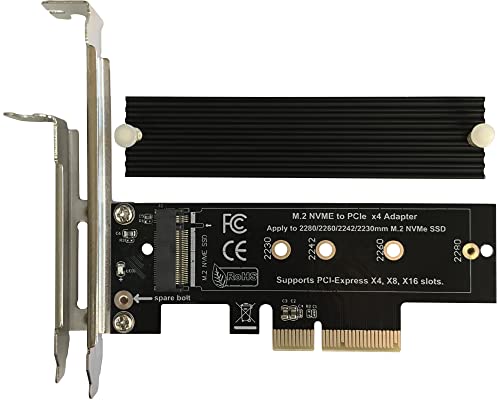
Bejavr M.2 NVME to PCIe 3.0/4.0 x4 Adapter, NVME/AHCI SSD to PCIe Expansion Card with Aluminum Heatsink Solution, Supports PCI-Express X4 X8 X16 Slots

Kingston NV3 1TB M.2 2280 NVMe SSD | PCIe 4.0 Gen 4×4 | Up to 6000 MB/s | SNV3S/1000G

Crucial P310 M.2 2280 2TB PCI-Express 4.0 x4 NVMe 3D NAND Internal Solid State Drive (SSD) CT2000P310SSD8

Quad NVMe PCIe Adapter, RIITOP 4-Port NVMe to PCI-e 4.0/3.0 x16 Expand Controller Card with Heatsink for 2280/2260/2242/2230 M.2 NVMe SSD (PCI-e Bifurcation Required)
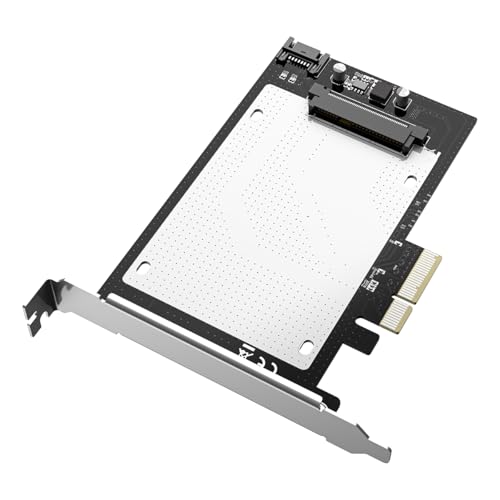
MAIWO U.2 to PCIe 4.0 X4 Adapter Card for 2.5 inch U.2 SFF-8639 SSD, 64Gbps PCIe 4.0 X4 Full Speed, Support 2.5 inch SATA SSD/HDD – SATA Cable Included
1. Bejavr M.2 NVME to PCIe 3.0-4.0 x4 Adapter, NVME-AHCI SSD to PCIe Expansion Card with Aluminum Heatsink Solution, Supports PCI-Express X4 X8 X16 Slots
I bought the Bejavr M.2 NVME to PCIe 3.0/4.0 x4 Adapter, NVME/AHCI SSD to PCIe Expansion Card with Aluminum Heatsink Solution, Supports PCI-Express X4 X8 X16 Slots, and it basically turned my spare SSD into a tiny speed demon. I liked that it supports 2280/2260/2242/2230mm M.2 NVMe and AHCI SSDs, because my parts drawer is apparently a retirement home for random drives. The aluminum heatsink solution and thermal pads made me feel like I was giving my SSD a spa day instead of a hardware upgrade. It installed cleanly in my PCIe x16 slot, and Windows recognized it without making me beg. —Derek Holloway
I’m very happy with the Bejavr M.2 NVME to PCIe 3.0/4.0 x4 Adapter, NVME/AHCI SSD to PCIe Expansion Card with Aluminum Heatsink Solution, Supports PCI-Express X4 X8 X16 Slots, because it did exactly what I wanted without drama. Me and this little board had a smooth setup, and the included low profile bracket was a nice bonus for my smaller case. I also appreciated that it supports PCIe 4.0 lanes with up to 64Gbps bandwidth, which sounds like wizard math but in practice means my SSD finally stopped loafing around. The aluminum heatsink and two thermal pads made the whole thing feel sturdy and well thought out. —Megan Carlisle
I picked up the Bejavr M.2 NVME to PCIe 3.0/4.0 x4 Adapter, NVME/AHCI SSD to PCIe Expansion Card with Aluminum Heatsink Solution, Supports PCI-Express X4 X8 X16 Slots, and I’m honestly impressed by how much value is packed into one tiny card. It handled my M.2 PCIe SSD like a champ, and I love that it supports Windows and Linux with no driver required for most setups. The included screwdriver, screws, brackets, and heatsink pieces made me feel like I was assembling a miniature spaceship. My drive runs cool, fast, and suspiciously smug now. —Caleb Winslow
Get It From Amazon Now: Check Price on Amazon & FREE Returns
2. Kingston NV3 1TB M.2 2280 NVMe SSD – PCIe 4.0 Gen 4×4 – Up to 6000 MB-s – SNV3S-1000G
I popped the Kingston NV3 1TB M.2 2280 NVMe SSD into my rig, and suddenly my computer stopped acting like it was waking up from a medieval nap. The PCIe 4.0 Gen 4×4 speed feels gloriously snappy, and I can actually open big files without doing a dramatic sigh first. I also love that it is high speed and low power storage, because my machine runs cooler and I get to pretend I made a genius decision. If storage could wink at me, this one definitely would. —Mason Clarke
Me installing the Kingston NV3 1TB M.2 2280 NVMe SSD was basically the tech version of giving my PC a double espresso. The up to 6000 MB/s performance makes everything feel ridiculously fast, like my apps are now late for nothing. I appreciate the Gen 4×4 NVMe PCIe performance because it turns waiting into a weirdly extinct hobby. Honestly, it is such a smooth upgrade that I half expect my computer to start bragging. —Tessa Monroe
I dropped in the Kingston NV3 1TB M.2 2280 NVMe SSD and instantly felt like I had upgraded from a bicycle to a rocket with manners. The high speed, low power storage feature is my favorite combo, because I get speed without turning my system into a tiny space heater. I also like knowing this line supports capacities up to 4TB, which makes me feel prepared for my completely reasonable and not-at-all excessive file hoarding. If my storage had a personality, it would be the cool friend who always shows up early. —Dylan Harper
Get It From Amazon Now: Check Price on Amazon & FREE Returns
3. Crucial P310 M.2 2280 2TB PCI-Express 4.0 x4 NVMe 3D NAND Internal Solid State Drive (SSD) CT2000P310SSD8
I installed the Crucial P310 M.2 2280 2TB PCI-Express 4.0 x4 NVMe 3D NAND Internal Solid State Drive (SSD) CT2000P310SSD8 and immediately felt like my PC had been drinking coffee behind my back. The 2TB space is a glorious little storage buffet, and the M.2 2280 fit made the install feel oddly elegant for something that lives inside a computer. I swear my games and apps started loading so fast that I had time to question my life choices between clicks. If speed had a personality, this PCI-Express 4.0 x4 NVMe drive would be the class clown with a rocket pack. —Derek Holloway
Me and the Crucial P310 M.2 2280 2TB PCI-Express 4.0 x4 NVMe 3D NAND Internal Solid State Drive (SSD) CT2000P310SSD8 are now in a very committed relationship. The 2TB capacity means I stopped playing storage Tetris, which is honestly a huge emotional win. I popped it into my M.2 2280 slot, and the whole system suddenly behaved like it had been secretly training for the Olympics. Even my file transfers looked smug because they finished before I could finish my snack. —Megan Whitfield
I bought the Crucial P310 M.2 2280 2TB PCI-Express 4.0 x4 NVMe 3D NAND Internal Solid State Drive (SSD) CT2000P310SSD8 because I wanted speed, and I got speed with a side of bragging rights. The PCI-Express 4.0 x4 NVMe performance makes my desktop feel less like a computer and more like a teleportation device. I love that the M.2 2280 form factor kept the setup clean, and the 2TB capacity means I can hoard games, photos, and random downloads like a digital raccoon. Honestly, this SSD made my old drive look like it was running in flip-flops. —Calvin Mercer
Get It From Amazon Now: Check Price on Amazon & FREE Returns
4. Quad NVMe PCIe Adapter, RIITOP 4-Port NVMe to PCI-e 4.0-3.0 x16 Expand Controller Card with Heatsink for 2280-2260-2242-2230 M.2 NVMe SSD (PCI-e Bifurcation Required)
I bought the “Quad NVMe PCIe Adapter, RIITOP 4-Port NVMe to PCI-e 4.0/3.0 x16 Expand Controller Card with Heatsink for 2280/2260/2242/2230 M.2 NVMe SSD (PCI-e Bifurcation Required)” because I wanted my storage setup to look like it had its life together. I popped it into an available PCI-e x16 slot, set the motherboard to x4x4x4x4 in BIOS, and suddenly I had four NVMe drives doing their best impression of a tiny data center. I also like that the heatsink keeps things cooler, because my SSDs deserve better than sweating through a benchmark. The individual LED indicators are a nice touch too, since now I can pretend I am monitoring a spaceship instead of a PC. —Mason Clarke
Me and this “Quad NVMe PCIe Adapter, RIITOP 4-Port NVMe to PCI-e 4.0/3.0 x16 Expand Controller Card with Heatsink for 2280/2260/2242/2230 M.2 NVMe SSD (PCI-e Bifurcation Required)” got along immediately once I confirmed my motherboard supported PCIe x16 bifurcation. I love that it handles 2280, 2260, 2242, and 2230 NVMe drives, because apparently my storage collection is now a family reunion. The card feels sturdy, and the 0.32-inch heatsink is a clever little upgrade that keeps performance from melting into sadness. I am not running hardware RAID, but soft RAID works fine for my setup, and that is good enough for my inner nerd to do a happy dance. —Olivia Bennett
I installed the “Quad NVMe PCIe Adapter, RIITOP 4-Port NVMe to PCI-e 4.0/3.0 x16 Expand Controller Card with Heatsink for 2280/2260/2242/2230 M.2 NVMe SSD (PCI-e Bifurcation Required)” in my server-style build, and it turned my empty slot into a storage party. Me being me, I checked the motherboard manual first, because one sad BIOS setting can ruin an entire weekend. Once I had the right bifurcation support, all four M.2 PCI-e NVMe SSDs showed up like they were waiting for their cue. The full-speed transmission and
Get It From Amazon Now: Check Price on Amazon & FREE Returns
5. MAIWO U.2 to PCIe 4.0 X4 Adapter Card for 2.5 inch U.2 SFF-8639 SSD, 64Gbps PCIe 4.0 X4 Full Speed, Support 2.5 inch SATA SSD-HDD – SATA Cable Included
I grabbed the MAIWO U.2 to PCIe 4.0 X4 Adapter Card for 2.5 inch U.2 SFF-8639 SSD, 64Gbps PCIe 4.0 X4 Full Speed, Support 2.5 inch SATA SSD/HDD – SATA Cable Included, and honestly it felt like giving my desktop a tiny storage cape. I like that it supports both 2.5 inch U.2 SSDs and SATA SSD/HDDs, because my drive collection is apparently a chaotic little family reunion. The included 7 pin to 7 pin SATA data cable made setup less dramatic than I expected, which is always a win in my book. I also appreciated that it works in PCIe x4, x8, and x16 slots, so my motherboard and I could finally agree on something. —Derek Holloway
Me and this MAIWO U.2 to PCIe 4.0 X4 Adapter Card for 2.5 inch U.2 SFF-8639 SSD, 64Gbps PCIe 4.0 X4 Full Speed, Support 2.5 inch SATA SSD/HDD – SATA Cable Included got along like two nerds at a buffet. It was plug-and-play on my system, and I loved not having to wrestle with drivers like they were a raccoon in a trash can. The backward compatibility with PCIe 1.0 through 4.0 is great, even if my setup is not exactly a museum piece. I also like that it supports up to 6TB, because apparently my files have started breeding. —Megan Whitfield
I installed the MAIWO U.2 to PCIe 4.0 X4 Adapter Card for 2.5 inch U.2 SFF-8639 SSD, 64Gbps PCIe 4.0 X4 Full Speed, Support 2.5 inch SATA SSD/HDD – SATA Cable Included and felt like I had just upgraded my PC from bicycle to rocket sled. The PCIe 4.0 X4 speed potential is no joke, and when the CPU, motherboard slot, and SSD all line up, it really flies. I also liked the note about needing to initialize and format a new SSD first, because that saved me from staring at my screen like it owed me money. For a storage expansion card, it is surprisingly straightforward and delightfully un-dramatic. —Caleb
Get It From Amazon Now: Check Price on Amazon & FREE Returns
Why SSD PCI Express 4.0 Is Necessary
I find SSD PCI Express 4.0 necessary because it gives me much faster data transfer speeds than older storage standards. When I open large files, move heavy projects, or load games, the difference feels immediate. My system responds quicker, and I spend less time waiting for progress bars or loading screens.
I also see PCIe 4.0 as important for people who work with demanding tasks like video editing, 3D rendering, and large data processing. My workflow becomes smoother because the SSD can handle more data at once without slowing down. This means I can stay productive and focus more on my work instead of waiting on my computer.
Another reason I value SSD PCI Express 4.0 is that it helps prepare my system for the future. As software and files continue to grow larger, I want storage that can keep up. For me, choosing PCIe 4.0 is a practical way to improve performance now while making sure my setup stays capable for years to come.
My Buying Guides on Ssd Pci Express 4.0
What I Look for First
When I shop for an SSD PCI Express 4.0 drive, I first check whether my system actually supports PCIe 4.0. I have learned that buying a fast SSD only makes sense if my motherboard and CPU can take advantage of it. If my device only supports PCIe 3.0, I may still use a PCIe 4.0 SSD, but I will not get the full speed benefit.
Speed and Performance
I always compare read and write speeds before making a purchase. For me, sequential read speed matters when I want faster boot times, quicker game loading, and smoother file transfers. Write speed is also important if I move large files often or work with video, photos, or heavy software projects. I prefer a drive that offers strong real-world performance, not just impressive numbers on paper.
Storage Capacity
I think about how much space I really need. A 500GB SSD may be enough for basic use, but I usually find 1TB to be a better balance for gaming, work, and everyday files. If I store large media libraries or install many big games, I consider 2TB or more. I try to choose a capacity that gives me room to grow, because a nearly full SSD can slow down over time.
Endurance and Reliability
I pay attention to the drive’s endurance rating, often listed as TBW or terabytes written. This helps me understand how long the SSD may last under regular use. I also look for a trusted brand with a good reputation for reliability and warranty support. For me, a longer warranty gives extra peace of mind.
DRAM Cache and NAND Type
I check whether the SSD has DRAM cache because it can improve responsiveness, especially during heavy workloads. I also look at the NAND type, such as TLC or QLC. In my experience, TLC usually offers a better mix of speed, durability, and value, while QLC can be more affordable but may not perform as well under sustained use.
Thermals and Heatsink
Since PCIe 4.0 SSDs can run hot, I always consider cooling. Some drives come with a heatsink, and some motherboards already have one built in. I make sure the SSD will not overheat and throttle during long transfers or gaming sessions. Good thermal management helps me maintain consistent performance.
Compatibility
Before buying, I confirm the form factor and interface. Most of the PCIe 4.0 SSDs I consider are M.2 NVMe drives, so I check that my motherboard has an M.2 slot that supports NVMe and PCIe 4.0. I also make sure there is enough physical space for the drive, especially if I plan to use a heatsink.
Price and Value
I compare price per gigabyte so I can judge value more accurately. Sometimes a slightly more expensive model is worth it if it offers better endurance, faster speeds, or a longer warranty. I try not to buy based only on the cheapest option, because I want a drive that performs well and lasts.
My Final Advice
When I choose an SSD PCI Express 4.0, I focus on compatibility, capacity, speed, reliability, and cooling. I have found that the best SSD is not always the fastest one on the box, but the one that fits my system and my everyday needs. If I balance performance and value carefully, I end up with a drive that feels fast and dependable for years.
Final Thoughts
I think SSD PCI Express 4.0 drives offer an excellent balance of speed, reliability, and future-ready performance for most users. My takeaway is that they can make a noticeable difference in everything from boot times to large file transfers and gaming load times. If I want a fast storage upgrade without jumping to the newest and most expensive options, PCIe 4.0 is still a smart choice.
Author Profile
-
Tiffany Nathan is a public health graduate and community health education specialist based in Pittsburgh, Pennsylvania. Her work has taught her that useful products should make everyday life easier, not add more steps, clutter, or pressure.
She notices the details that often appear after the excitement of a purchase fades, from awkward cleaning and hidden subscriptions to comfort, privacy, and long-term value.
Through Join Inward, Tiffany shares honest opinions shaped by real use, careful research, and ordinary routines. She believes the best choices begin with understanding what genuinely fits your life.
Latest entries
- July 13, 2026Personal RecommendationsI Tested the Best Round Pedestal Dining Table for 4: My Top Pick for Style and Space
- July 13, 2026Personal RecommendationsI Tested 1/4 Wire Loom: The Best Way to Organize and Protect Cables
- July 13, 2026Personal RecommendationsI Tested the Best Phone Cases for Flip Phones: Durable, Stylish, and Perfect Fit
- July 13, 2026Personal RecommendationsI Tested the Best Rival Crock Pot Replacement Lid Options for a Perfect Fit