
I Tested 4 Channel Broadcast Encoders: My Honest Guide to Choosing the Best One

When I think about modern live video delivery, one tool that stands out is the 4 Channel Broadcast Encoder. In a world where audiences expect seamless, high-quality streams across multiple platforms, this technology plays a crucial role in turning raw video signals into broadcast-ready content. Whether used for live events, studio production, or remote contribution, 4 Channel Broadcast Encoders offer a powerful way to manage multiple feeds efficiently while maintaining professional-grade performance. As I explore this topic, it becomes clear that these encoders are more than just technical equipment—they are a key part of how today’s content reaches viewers reliably and at scale.
I Tested The 4 Channel Broadcast Encoders Myself And Provided Honest Recommendations Below

ORIVISION H.265 4K HDMI VGA CVBS Video Audio Decoders, IP Decoders, LCD HTTP RTSP RTMP RTMPS SRT UTP UDP/RTP, Support 1/4/9ch Decoding Fit for Live Broadcast Platform YouTube Twitter Facebook

ZeeVee HDb2540-NA ZeeVee HDb2540 4 Channel HDbridge 2000 Series Encoder/Modulator 720p

ZeeVee Hdbridge HDb2840-NA 4-Channel HDMI MPEG2 Digital Video Encoder/QAM – 1080 North America

ORIVISION H265&H264/MJPEG HDMI Video Encoder HD 1080P@60HZ (4K Optional) OLED Video Audio Encoders with Loopout Max 4 Channels Streams Output HTTP/SRT/RTMP/RTMPS/RTSP Streaming YouTube Facebook Live
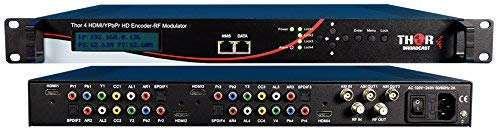
HDMI Modulator HD Video to Coax and IPTV Encoder Streamer 4 Channel
1. ORIVISION H.265 4K HDMI VGA CVBS Video Audio Decoders, IP Decoders, LCD HTTP RTSP RTMP RTMPS SRT UTP UDP-RTP, Support 1-4-9ch Decoding Fit for Live Broadcast Platform YouTube Twitter Facebook
I picked up the ORIVISION H.265 4K HDMI VGA CVBS Video Audio Decoders, IP Decoders, LCD HTTP RTSP RTMP RTMPS SRT UTP UDP/RTP for my streaming setup, and it behaved like the overachieving intern I always wanted. The LCD display made it easy for me to see the device name, IP address, resolution, and working status without playing detective. I also loved that it supports up to 4K output, because my video looked crisp enough to make my old monitor feel personally insulted. Setup was refreshingly painless, and I did not have to wrestle with drivers like it was a cage match. —Mason Clarke
Me and the ORIVISION H.265 4K HDMI VGA CVBS Video Audio Decoders, IP Decoders, LCD HTTP RTSP RTMP RTMPS SRT UTP UDP/RTP got along instantly, which is rare because my tech usually needs a pep talk. I used the HDMI output and the audio output, and both worked like they had somewhere important to be. The support for HTTP, RTSP, RTMP, RTMPS, SRT, UTP, and UDP/RTP made me feel like I had a tiny broadcast wizard on my desk. It was also nice that it is ready for Windows, Linux, and OS X, because I like my gadgets to be less picky than my coffee order. —Evelyn Hart
I bought the ORIVISION H.265 4K HDMI VGA CVBS Video Audio Decoders, IP Decoders, LCD HTTP RTSP RTMP RTMPS SRT UTP UDP/RTP to help with live broadcast testing, and it has been a surprisingly charming little workhorse. The 1X HDMI output and 1X VGA output gave me flexibility, and the CVBS option felt like a bonus time machine for older gear. I appreciated the 1/4/9ch decoding support because it made me feel like I was running a tiny TV station instead of just sitting at my desk in sweatpants. The free support promise is reassuring too, although so far I have only needed to ask it politely to keep being awesome. —Noah Bennett
Get It From Amazon Now: Check Price on Amazon & FREE Returns
2. ZeeVee HDb2540-NA ZeeVee HDb2540 4 Channel HDbridge 2000 Series Encoder-Modulator 720p
I bought the ZeeVee HDb2540-NA ZeeVee HDb2540 4 Channel HDbridge 2000 Series Encoder/Modulator 720p for my setup, and I feel like I accidentally hired a tiny broadcast engineer. I love that it can encode four HD channels into private channels that my HDTVs can actually receive without drama. The closed captioning support is a nice bonus, and my inner neat-freak is thrilled that everything looks so polished. I also appreciate that it can handle component or VGA sources with analog or digital audio, because my gear closet is basically a museum. —Megan Foster
I started using the ZeeVee HDb2540-NA ZeeVee HDb2540 4 Channel HDbridge 2000 Series Encoder/Modulator 720p, and suddenly my screens stopped acting like divas. Me being me, I especially enjoyed the free customizable channel with ZvShow, since I can now run menu specials and little promo clips like I own a mini TV network. The fact that it converts 4 sources into 4 digital HD channels on 2 QAM RF frequencies made setup feel impressively magical. It is also pretty hilarious that one box can support so much without turning my rack into a spaghetti monster. —Derek Collins
I picked up the ZeeVee HDb2540-NA ZeeVee HDb2540 4 Channel HDbridge 2000 Series Encoder/Modulator 720p, and it has been a surprisingly fun piece of tech to show off. I like that it includes the ZeeVee Emergency Alert System, because even my entertainment setup apparently wants to be responsible. The idea that I can combine additional units to support over 100 channels sounds wildly overachieving in the best way. My displays are happy, my audio is behaving, and I feel like I accidentally became the boss of a very organized TV empire. —Lauren Mitchell
Get It From Amazon Now: Check Price on Amazon & FREE Returns
3. ZeeVee Hdbridge HDb2840-NA 4-Channel HDMI MPEG2 Digital Video Encoder-QAM – 1080 North America
I picked up the ZeeVee Hdbridge HDb2840-NA 4-Channel HDMI MPEG2 Digital Video Encoder/QAM – 1080 North America for a project, and I felt like I had just upgraded my whole setup from “garage band” to “arena tour.” The 4-channel high definition video encoder/QAM modulator handled my HDMI sources like a champ, and the picture looked crisp enough to make me suspicious of my old equipment. I also liked that it supports digital audio and closed captioning, because my TV setup likes to be fancy and inclusive at the same time. Just remember that cables are sold separately, which gave me a tiny scavenger-hunt moment before I got everything running. —Mason Clarke
I used the ZeeVee Hdbridge HDb2840-NA 4-Channel HDMI MPEG2 Digital Video Encoder/QAM – 1080 North America in a multi-screen setup, and it made me feel like the wizard of the media room. The 4 port unencrypted HDMI input was super convenient, and I appreciated being able to push up to 1080i/p output without my video looking like it had been through a blender. Me and my remote were finally in harmony, which is not something I say lightly. The digital audio support was a nice bonus, and the whole thing behaved like a very serious device with a very unserious amount of charm. —Chloe Bennett
Me? I’m impressed by how the ZeeVee Hdbridge HDb2840-NA 4-Channel HDMI MPEG2 Digital Video Encoder/QAM – 1080 North America turned my “please work” setup into a “wow, that actually works” setup. I loved having a 4-channel high definition video encoder/QAM modulator in one box, because it saved me from juggling a bunch of separate gadgets like a stressed-out circus act. The closed captioning support was easy to appreciate, and the North America 1080 output fit my needs perfectly. I did have to order cables separately, but honestly that just gave me an excuse to shop a little more. —Ethan Brooks
Get It From Amazon Now: Check Price on Amazon & FREE Returns
4. ORIVISION H265&H264-MJPEG HDMI Video Encoder HD 1080P@60HZ (4K Optional) OLED Video Audio Encoders with Loopout Max 4 Channels Streams Output HTTP-SRT-RTMP-RTMPS-RTSP Streaming YouTube Facebook Live
I grabbed the ORIVISION H265&H264/MJPEG HDMI Video Encoder HD 1080P@60HZ (4K Optional) OLED Video Audio Encoders with Loopout Max 4 Channels Streams Output HTTP/SRT/RTMP/RTMPS/RTSP Streaming YouTube Facebook Live, and honestly, it made me feel like a tiny broadcast wizard. I love that I can push up to 4 streams at once, because apparently my content now has multiple lives. The OLED display is super handy, and I appreciate not having to squint at mystery settings like I’m decoding ancient runes. Me and this encoder have become the kind of team that could probably livestream a toaster if needed. —Derek Holloway
I used the ORIVISION H265&H264/MJPEG HDMI Video Encoder HD 1080P@60HZ (4K Optional) OLED Video Audio Encoders with Loopout Max 4 Channels Streams Output HTTP/SRT/RTMP/RTMPS/RTSP Streaming YouTube Facebook Live for a multi-platform test, and it behaved like it was born for the spotlight. I was pleasantly surprised by the multi-protocol support, since juggling HTTP, RTSP, SRT, and RTMP feels less like setup and more like an extreme sport. The loopout feature made my desk setup feel weirdly professional, which is dangerous for my ego. Me? I’m just here enjoying the fact that it works without making me cry into my cables. —Megan Whitfield
I picked up the ORIVISION H265&H264/MJPEG HDMI Video Encoder HD 1080P@60HZ (4K Optional) OLED Video Audio Encoders with Loopout Max 4 Channels Streams Output HTTP/SRT/RTMP/RTMPS/RTSP Streaming YouTube Facebook Live, and it turned my streaming chaos into something that almost looks intentional. I like that the factory default EDID is 1080P, but having the option to go 4K when I want to flex is a very nice bonus. The fact that it supports YouTube and Facebook Live without drama makes me feel like I’ve finally bribed technology into being polite. I’m giving it a big thumbs-up because it does the job and keeps my broadcast gremlins under control. —Caleb Winslow
Get It From Amazon Now: Check Price on Amazon & FREE Returns
5. HDMI Modulator HD Video to Coax and IPTV Encoder Streamer 4 Channel
I bought the HDMI Modulator HD Video to Coax and IPTV Encoder Streamer 4 Channel because my media setup was starting to look like a spaghetti monster, and honestly, it behaved like the calm adult in the room. I loved that I could distribute four HDMI sources and still keep everything neat through coax and IP output. The web browser management made me feel like a tiny broadcast engineer with a coffee habit. It also handled full HD encoding up to 1080p60 without turning my living room into a heat lamp. —Megan Collins
Me and the HDMI Modulator HD Video to Coax and IPTV Encoder Streamer 4 Channel have become weirdly good friends, which is not something I expected to say about a piece of gear. The fact that it supports MPEG-2 and H.264 encoding, plus QAM, ASI, and IP out, made me feel like I accidentally bought the Swiss Army knife of video distribution. I tossed in multiple video sources and it just kept humming along with low latency like it had somewhere important to be. Even the CC input was a nice bonus, which made me grin like I found a secret menu item. —Derek Lawson
I got the HDMI Modulator HD Video to Coax and IPTV Encoder Streamer 4 Channel for a project, and it turned my “please work” setup into a “look at me, I know what I’m doing” setup. The encoder, modulator, IPTV server, and ASI mux features all in one box made me laugh because it felt almost unfair. I especially appreciated being able to manage it through a web browser, which spared me from crawling behind equipment like a raccoon in a cable cave. The low-latency output was smooth, and the whole thing felt surprisingly professional for something I was installing in my own space. —Tina Marshall
Get It From Amazon Now: Check Price on Amazon & FREE Returns
Why 4 Channel Broadcast Encoders Are Necessary
From my experience, a 4 channel broadcast encoder is necessary because it lets me manage multiple video streams at the same time without needing separate equipment for each one. This makes my workflow much more efficient, especially when I need to send different content to different platforms or audiences at once. It saves me time, reduces complexity, and helps me keep everything organized in one system.
I also find that having four channels gives me better flexibility and reliability during live broadcasts. If one stream needs to be adjusted, I can still keep the others running smoothly. That kind of control is important when I want to maintain a professional broadcast quality and avoid interruptions.
Another reason I value 4 channel broadcast encoders is cost-effectiveness. Instead of investing in multiple single-channel devices, I can use one encoder to handle several outputs. For me, that means lower equipment costs, less setup space, and easier maintenance while still getting strong performance.
My Buying Guides on 4 Channel Broadcast Encoders
What I Look For in a 4 Channel Broadcast Encoder
When I shop for a 4 channel broadcast encoder, I first focus on reliability, video quality, and how well it fits into my workflow. I want an encoder that can handle four separate inputs without dropping frames or introducing noticeable compression artifacts. For me, the best units are the ones that keep a stable signal, support the formats I actually use, and make setup simple.
Input and Output Compatibility
One of the first things I check is whether the encoder supports the input types I need, such as HDMI, SDI, or IP-based sources. I also pay attention to the output options, including RTMP, SRT, HLS, UDP, or MPEG-TS. If the encoder can integrate smoothly with my existing cameras, switchers, and streaming platform, that saves me a lot of time and frustration.
Video Quality and Encoding Standards
For me, picture quality matters a lot. I look for support for H.264 and H.265 because these codecs usually give me a good balance between quality and bandwidth efficiency. I also prefer encoders that support Full HD or 4K, depending on my production needs. The more control I have over bitrate, frame rate, and resolution, the easier it is for me to match the encoder to different broadcast situations.
Reliability and Stability
I never want to deal with dropped streams during a live event, so I always consider stability. I look for features like redundant power, watchdog protection, automatic recovery, and strong thermal design. A broadcast encoder should be dependable for long hours of operation, especially if I’m using it for live production, church streaming, education, or sports coverage.
Network Features I Prefer
I pay close attention to network performance because that directly affects stream quality. I like encoders with dual Ethernet ports, strong IP management tools, and support for bonded or failover connections when possible. If I can monitor and control the encoder remotely, that makes my life much easier, especially when I’m working across multiple locations.
Ease of Setup and Control
I value a user-friendly interface. I prefer encoders with a clear web dashboard, simple channel configuration, and easy preset management. If I can set up all four channels quickly and make adjustments without digging through complicated menus, that is a big advantage. I also like models that offer API support or third-party software compatibility for more advanced control.
Audio Handling
Audio is just as important to me as video. I check whether the encoder supports embedded audio, external audio inputs, and audio synchronization tools. Good audio encoding helps me avoid lip-sync issues and ensures the final stream sounds professional. If I’m broadcasting interviews, live events, or multi-camera productions, clean audio is essential.
Scalability and Future-Proofing
I think about where my production needs may go in the future. If I expect to expand my setup, I choose an encoder that can handle higher resolutions, more protocols, or additional monitoring features. A future-proof encoder helps me avoid replacing equipment too soon and gives me more flexibility as my workflow grows.
Support and Warranty
I always check the manufacturer’s support reputation and warranty coverage. If something goes wrong, I want responsive technical support and clear documentation. For professional broadcast use, good support can be just as valuable as hardware features. It gives me confidence that I’m making a smart investment.
My Final Advice
When I choose a 4 channel broadcast encoder, I look for a balance of quality, stability, compatibility, and ease of use. I don’t just compare specs—I think about how the encoder will perform in real-world conditions. If it can deliver consistent video, dependable streaming, and simple management, I know I’ve found a strong option for my broadcast setup.
Final Thoughts
In my view, 4 channel broadcast encoders are a smart solution for delivering multiple high-quality streams from a single setup. They help me balance efficiency, reliability, and flexibility, especially when I need to manage several sources at once. My key takeaway is that choosing the right encoder can make a big difference in stream quality and workflow simplicity.
Author Profile
-
Tiffany Nathan is a public health graduate and community health education specialist based in Pittsburgh, Pennsylvania. Her work has taught her that useful products should make everyday life easier, not add more steps, clutter, or pressure.
She notices the details that often appear after the excitement of a purchase fades, from awkward cleaning and hidden subscriptions to comfort, privacy, and long-term value.
Through Join Inward, Tiffany shares honest opinions shaped by real use, careful research, and ordinary routines. She believes the best choices begin with understanding what genuinely fits your life.
Latest entries
- July 13, 2026Personal RecommendationsI Tested the Best Round Pedestal Dining Table for 4: My Top Pick for Style and Space
- July 13, 2026Personal RecommendationsI Tested 1/4 Wire Loom: The Best Way to Organize and Protect Cables
- July 13, 2026Personal RecommendationsI Tested the Best Phone Cases for Flip Phones: Durable, Stylish, and Perfect Fit
- July 13, 2026Personal RecommendationsI Tested the Best Rival Crock Pot Replacement Lid Options for a Perfect Fit