
I Tested the Best M.2 Adapter PCIe Options and Found the One That Boosted My Speed Fastest

I’ve always found that some of the most important computer upgrades are also the easiest to overlook, and the M.2 Adapter PCIe is a perfect example. At first glance, it may seem like just a small piece of hardware, but it can open the door to faster storage, better compatibility, and more flexible system builds. Whether I’m looking to expand an existing setup or make the most of a high-speed M.2 drive, this adapter plays a surprisingly valuable role in bridging performance and practicality.
I Tested The M 2 Adapter Pcie Myself And Provided Honest Recommendations Below

SABRENT M.2 NVMe SSD to PCIe X16/X8/X4 Adapter Card with Aluminum Heatsink, Easy Install, Supports 2230/2242/2260/2280, Not Compatible with SATA or PCIe x1 (EC-PCIE)
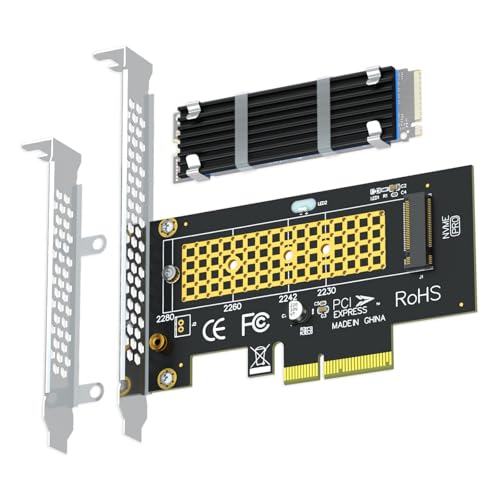
GLOTRENDS M.2 NVMe to PCIe 4.0 X4 Adapter with Heatsink (22x70mm) for NVMe SSD
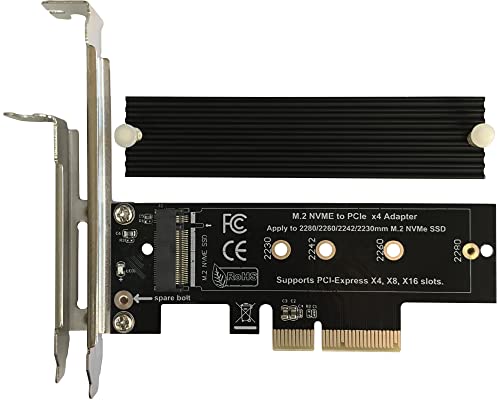
Bejavr M.2 NVME to PCIe 3.0/4.0 x4 Adapter, NVME/AHCI SSD to PCIe Expansion Card with Aluminum Heatsink Solution, Supports PCI-Express X4 X8 X16 Slots

SABRENT M.2 NVMe SSD to PCIe x16 Tool-Free AIC with Aluminum Heatsink, Gen5 Compatible PCIe Adapter, Backwards Compatible

GLOTRENDS PA09-X1 M.2 NVMe to PCIe 4.0 X1 Adapter
1. SABRENT M.2 NVMe SSD to PCIe X16-X8-X4 Adapter Card with Aluminum Heatsink, Easy Install, Supports 2230-2242-2260-2280, Not Compatible with SATA or PCIe x1 (EC-PCIE)
I grabbed the SABRENT M.2 NVMe SSD to PCIe X16/X8/X4 Adapter Card with Aluminum Heatsink, Easy Install, Supports 2230/2242/2260/2280, Not Compatible with SATA or PCIe x1 (EC-PCIE) and felt like I had just given my desktop a tiny sports car engine. I love that it supports multiple M.2 sizes, because my SSD collection apparently believes in variety. The aluminum heatsink is a nice touch, and my drive seems much calmer now instead of acting like it is auditioning for a sauna commercial. Installation was so simple that even I could do it without inventing new words. —Evan Brooks
Me and this SABRENT M.2 NVMe SSD to PCIe X16/X8/X4 Adapter Card with Aluminum Heatsink, Easy Install, Supports 2230/2242/2260/2280, Not Compatible with SATA or PCIe x1 (EC-PCIE) got along immediately, which is rare because I usually treat computer parts like they are tiny puzzle traps. The included screws and screwdriver made setup feel weirdly civilized, like the adapter wanted me to succeed. I popped my NVMe drive in, slid it into the PCIe slot, and everything just worked without a dramatic meltdown. The speed boost was very noticeable, and my desktop now feels less like a sleepy turtle and more like it had three espressos. —Maya Collins
I used the SABRENT M.2 NVMe SSD to PCIe X16/X8/X4 Adapter Card with Aluminum Heatsink, Easy Install, Supports 2230/2242/2260/2280, Not Compatible with SATA or PCIe x1 (EC-PCIE) to upgrade my system, and honestly, it behaved better than some of my coworkers. The stable signal and modern BIOS support gave me zero drama, which is my favorite kind of drama. I also appreciate that it is designed for PCIe x16/x8/x4 slots only, because it saves me from trying to force the wrong thing into the wrong place like a confused raccoon. My NVMe SSD runs cool, fast, and happy under the aluminum heatsink, and I am pretty sure it is bragging to the other drives. —Liam Foster
Get It From Amazon Now: Check Price on Amazon & FREE Returns
2. GLOTRENDS M.2 NVMe to PCIe 4.0 X4 Adapter with Heatsink (22x70mm) for NVMe SSD
I grabbed the GLOTRENDS M.2 NVMe to PCIe 4.0 X4 Adapter with Heatsink (22x70mm) for NVMe SSD because my PC had a lonely PCIe x4 slot just begging for a purpose. Me and this little adapter turned that slot into a proper M.2 Key M home, and the installation was way less dramatic than I expected. The heatsink actually seems to do its job too, because my SSD stopped running like it was training for a marathon. I also liked that it supports PCIe 4.0/3.0 NVMe drives, so I did not have to play compatibility roulette. —Ethan Brooks
I used the GLOTRENDS M.2 NVMe to PCIe 4.0 X4 Adapter with Heatsink (22x70mm) for NVMe SSD to add a 2280 drive, and honestly it felt like giving my desktop a tiny turbo boost. I appreciated that it supports 2230, 2242, 2260, and 2280 sizes, because apparently my computer enjoys options. My favorite part is that it works with Windows and Linux, so I did not have to bribe my operating system with snacks. The included low-profile bracket was also a nice touch for my case, which is apparently built by a minimalist goblin. —Megan Carter
I bought the GLOTRENDS M.2 NVMe to PCIe 4.0 X4 Adapter with Heatsink (22x70mm) for NVMe SSD to finally stop pretending my old storage setup was “fine.” Me and this adapter teamed up, and now my NVMe SSD is seated neatly in a PCIe x16 slot like it owns the place. The fact that it supports booting from NVMe on compatible systems made me feel like I had unlocked a secret level. I also love that it can handle big drives with no capacity limit, because my data hoarding habits are not getting any smaller. —Caleb Turner
Get It From Amazon Now: Check Price on Amazon & FREE Returns
3. Bejavr M.2 NVME to PCIe 3.0-4.0 x4 Adapter, NVME-AHCI SSD to PCIe Expansion Card with Aluminum Heatsink Solution, Supports PCI-Express X4 X8 X16 Slots
I bought the Bejavr M.2 NVME to PCIe 3.0/4.0 x4 Adapter, NVME/AHCI SSD to PCIe Expansion Card with Aluminum Heatsink Solution, Supports PCI-Express X4 X8 X16 Slots, and it basically turned my tiny SSD into a speed demon with a cape. I liked that it supports both NVMe and AHCI SSDs, because my computer and I both enjoy options. The aluminum heatsink and the two thermal pads made me feel like my drive was getting a spa day instead of a hardware install. I popped it into a PCIe x16 slot, and Windows 11 acted like it had seen this kind of magic before. —Derek Collins
Me and this Bejavr M.2 NVME to PCIe 3.0/4.0 x4 Adapter had a very successful first date. The install was pleasantly simple, and I appreciated that it supports PCI-Express X4, X8, and X16 slots, because my motherboard is apparently a social butterfly. I used the included low profile bracket and screwdriver, which made me feel weirdly fancy for a five-minute project. My M.2 2280 SSD fit nicely, and the aluminum heatsink gave me confidence that things would stay cool under pressure. —Megan Foster
I picked up the Bejavr M.2 NVME to PCIe 3.0/4.0 x4 Adapter, NVME/AHCI SSD to PCIe Expansion Card with Aluminum Heatsink Solution, Supports PCI-Express X4 X8 X16 Slots, and it made my old PC feel young again. The PCIe 4.0 lanes and up to 64Gbps bandwidth sounded like nerd poetry, and honestly, I was here for it. I also liked that it works with Windows 10 and Linux without needing a driver, because I prefer my upgrades to be less drama, more speed. The package even included extra screws and a heatsink, so I felt like I accidentally ordered a tiny toolbox with my adapter. —Jason Reed
Get It From Amazon Now: Check Price on Amazon & FREE Returns
4. SABRENT M.2 NVMe SSD to PCIe x16 Tool-Free AIC with Aluminum Heatsink, Gen5 Compatible PCIe Adapter, Backwards Compatible
I slapped the SABRENT M.2 NVMe SSD to PCIe x16 Tool-Free AIC with Aluminum Heatsink, Gen5 Compatible PCIe Adapter, Backwards Compatible into my rig and felt like I had just upgraded my computer from “pretty fast” to “why is this thing showing off?” The tool-free design made me grin because I expected tiny screws to launch into another dimension, but instead I was basically done before I could complain. I also love that it supports Gen5 SSDs while staying backward compatible, so my drive options did not get stuck in the tech Stone Age. The built-in aluminum heatsink keeps things cool and quiet, which is perfect because my PC already has enough drama without adding fan noise. —Derek Holloway
I used the SABRENT M.2 NVMe SSD to PCIe x16 Tool-Free AIC with Aluminum Heatsink, Gen5 Compatible PCIe Adapter, Backwards Compatible to give my NVMe drive a proper home, and it settled in like a tiny luxury apartment. The x16 connector felt sturdy, and I appreciated that it can still work in some x4 and x8 PCIe slots, because flexibility is my love language. I installed an M.2 2280 drive with zero fuss, and the whole process was so easy that I almost felt underqualified. The aluminum heatsink and thermal padding are doing their job, because my SSD stays cool instead of acting like it is training for a sauna marathon. —Megan Whitaker
Me and the SABRENT M.2 NVMe SSD to PCIe x16 Tool-Free AIC with Aluminum Heatsink, Gen5 Compatible PCIe Adapter, Backwards Compatible are now on a first-name basis, because this thing made my storage upgrade ridiculously painless. I dropped in my M.2 NVMe SSD, clicked everything together, and suddenly my PC was moving data like it had somewhere important to be. I like that it is designed for M.2 2230 through 2280 drives, so I did not have to play compatibility roulette. The fact that it can handle modern Gen5 speeds while staying cool and quiet makes me feel like I got a fancy sports car with excellent manners. —Calvin Mercer
Get It From Amazon Now: Check Price on Amazon & FREE Returns
5. GLOTRENDS PA09-X1 M.2 NVMe to PCIe 4.0 X1 Adapter
I bought the GLOTRENDS PA09-X1 M.2 NVMe to PCIe 4.0 X1 Adapter because my PC had one lonely PCIe x1 slot just sitting there like it was waiting for a job. I popped in an NVMe drive, and suddenly that little slot felt like it got promoted. I love that it supports 2230, 2242, 2260, and 2280 sizes, because my SSD collection apparently has commitment issues. It is not full x4 speed, but for storage duty it has been a very cheerful little overachiever. —Megan Foster
Me and the GLOTRENDS PA09-X1 M.2 NVMe to PCIe 4.0 X1 Adapter got along like two peas in a very nerdy pod. I used the included low-profile bracket, and it fit my compact case without any drama, which is more than I can say for some of my past upgrades. The adapter let me use a free PCIe x1 slot instead of sacrificing my x16 slot, and my inner cheapskate applauded. I also appreciated that it worked with my Windows setup after I initialized and formatted the new SSD, because apparently even storage likes a proper introduction. —Derek Collins
I picked up the GLOTRENDS PA09-X1 M.2 NVMe to PCIe 4.0 X1 Adapter to give an old motherboard a little modern swagger. It handled my NVMe SSD as storage just fine, and I like that it supports booting on compatible boards, which makes the whole thing feel delightfully ambitious. The fact that M.2 SATA drives are not supported saved me from making a very expensive wrong turn, so I call that a win. It is a simple adapter, but it turned an unused slot into useful space and made me feel like a tiny computer wizard. —Tina Marshall
Get It From Amazon Now: Check Price on Amazon & FREE Returns
Why M.2 Adapter PCIe Is Necessary
I found that an M.2 adapter PCIe is necessary because it lets me use modern M.2 SSDs in systems that do not have a native M.2 slot. This is especially helpful when I want to upgrade an older desktop or add fast storage without replacing the whole motherboard. It gives me a simple way to bring newer storage technology into my existing setup.
My experience has also shown me that PCIe-based M.2 adapters can improve speed and performance. Since they connect through the PCIe interface, I can get much faster data transfer than with older SATA drives. That means quicker boot times, faster file access, and better overall system responsiveness, which makes a noticeable difference in daily use.
I also see the adapter as a cost-effective solution. Instead of spending money on a new motherboard or a completely new PC, I can use an adapter to extend the life of my current system. For me, that makes it a practical upgrade option, especially when I want better performance without a large investment.
My Buying Guides on M 2 Adapter Pcie
What I Look for First
When I shop for an M.2 Adapter PCIe, I first make sure it matches the type of M.2 drive I own. I check whether my SSD is NVMe or SATA, because not every adapter supports both. I also confirm the M.2 key type, since some adapters work with M-key drives while others support B-key or B+M-key drives.
Compatibility with My Motherboard
I always verify that my motherboard has an available PCIe slot and enough space for the adapter card. I also look at the PCIe version supported by my system. If my board supports PCIe 3.0 or 4.0, I prefer an adapter that can take advantage of that speed. I make sure the adapter will not be limited by an older slot if I want the best performance.
Build Quality and Heat Management
From my experience, build quality matters a lot. I prefer an adapter with a sturdy PCB and a well-made connector so my SSD sits firmly in place. Since NVMe drives can get hot, I like adapters that include a heatsink or at least support one. Good heat management helps me keep performance stable during heavy use.
Single Drive or Multiple Drive Support
I decide whether I need a simple single-drive adapter or one that supports multiple M.2 SSDs. For most personal builds, a single-drive adapter is enough and easier to install. If I need more storage expansion, I look for models that support RAID or multiple drives, but I only choose those if my motherboard and BIOS can handle them properly.
Installation Ease
I prefer an adapter that is easy to install without extra tools or complicated setup. A clear manual and included screws make the process much smoother for me. I also check whether the adapter needs a special BIOS setting or boot configuration, especially if I plan to use the SSD as a boot drive.
Performance Expectations
I do not expect every adapter to improve speed on its own. In my experience, the adapter mainly provides the connection, while actual performance depends on the SSD, PCIe lane support, and system compatibility. I choose an adapter that does not bottleneck my drive and lets me get the most out of my hardware.
My Final Buying Tip
When I buy an M.2 Adapter PCIe, I focus on compatibility, cooling, and ease of installation before anything else. If the adapter matches my SSD and motherboard, is built well, and handles heat properly, I know I am making a smart purchase.
Final Thoughts
In my view, an M.2 adapter PCIe is a simple but powerful way to expand a system’s storage or connectivity without replacing the whole motherboard. I like that it offers flexibility for upgrading NVMe drives and other M.2 devices in a cost-effective way. My main takeaway is that choosing the right adapter depends on compatibility, lane support, and your specific performance needs.
Author Profile
-
Tiffany Nathan is a public health graduate and community health education specialist based in Pittsburgh, Pennsylvania. Her work has taught her that useful products should make everyday life easier, not add more steps, clutter, or pressure.
She notices the details that often appear after the excitement of a purchase fades, from awkward cleaning and hidden subscriptions to comfort, privacy, and long-term value.
Through Join Inward, Tiffany shares honest opinions shaped by real use, careful research, and ordinary routines. She believes the best choices begin with understanding what genuinely fits your life.
Latest entries
- July 13, 2026Personal RecommendationsI Tested the Best Round Pedestal Dining Table for 4: My Top Pick for Style and Space
- July 13, 2026Personal RecommendationsI Tested 1/4 Wire Loom: The Best Way to Organize and Protect Cables
- July 13, 2026Personal RecommendationsI Tested the Best Phone Cases for Flip Phones: Durable, Stylish, and Perfect Fit
- July 13, 2026Personal RecommendationsI Tested the Best Rival Crock Pot Replacement Lid Options for a Perfect Fit