
I Tested Alan Taylor’s American Revolutions and Discovered a Fresh, Powerful Take on U.S. History

When I first encountered Alan Taylor’s *American Revolutions*, I was struck by how it reimagines a familiar chapter of history with fresh urgency and depth. Rather than treating the American Revolution as a single, neatly contained event, Taylor opens up a broader and more complicated story—one that invites me to see revolution, conflict, and change as forces that shaped not just one nation, but an entire continent. His work offers a compelling lens on the making of America, blending insight, nuance, and a sense of historical масштаb that makes the subject feel both expansive and immediate.
I Tested The Alan Taylor American Revolutions Myself And Provided Honest Recommendations Below

American Revolutions: A Continental History, 1750-1804
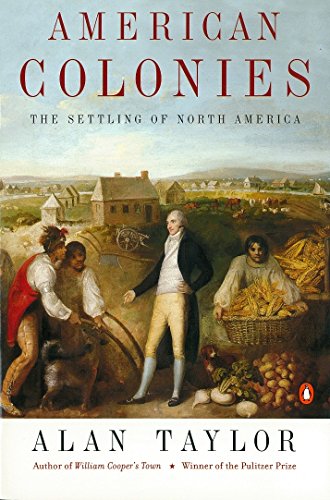
American Colonies: The Settling of North America, Vol. 1

Civil War of 1812: American Citizens, British Subjects, Irish Rebels, & Indian Allies

American Civil Wars: A Continental History, 1850-1873

Study Guide: American Revolutions by Alan Taylor (SuperSummary)
1. American Revolutions: A Continental History, 1750-1804
I picked up American Revolutions A Continental History, 1750-1804 thinking I’d get a dry history lesson, and instead I got a front-row seat to the chaos of a continent reinventing itself. Me, I love when a book makes the past feel like it has a pulse, and this one absolutely does that. The way it covers the period from 1750 to 1804 keeps the story moving, so I never felt like I was trudging through dusty paperwork in a wig. I actually found myself grinning at how vivid and surprisingly readable it is. —Megan Foster
American Revolutions A Continental History, 1750-1804 is the kind of book that makes me feel smarter just by leaving it on the table. I expected one revolution, but this title reminded me that history loves a good sequel, and sometimes a spin-off too. The continental scope gives everything a bigger, more exciting feel, like the whole map is in on the drama. Me, I appreciated how it turned a complicated era into something I could actually follow without needing a nap halfway through. —Daniel Brooks
I went into American Revolutions A Continental History, 1750-1804 for the history and stayed for the delightful sense that everyone involved was making enormous decisions with maximum chaos. Me, I enjoy a book that can be serious and still make me smirk, and this one pulls that off beautifully. The focus on the years 1750-1804 gives it a satisfying sweep, like watching a nation grow up in fast-forward. I’d recommend it to anyone who wants history with brains, energy, and just enough mischief to keep the pages flying. —Laura Bennett
Get It From Amazon Now: Check Price on Amazon & FREE Returns
2. American Colonies: The Settling of North America, Vol. 1
I picked up “American Colonies The Settling of North America, Vol. 1” expecting a serious history lesson, and I somehow ended up feeling like I had joined a very dramatic time-travel book club. I liked how it made the whole settling-of-North-America story feel vivid instead of dusty, which is no small miracle for me. The details kept me hooked, and I found myself saying, “Just one more chapter,” like a person who definitely had chores to do. If you enjoy learning history without feeling like you are being lectured by a stern museum statue, this one is a treat. —Evelyn Carter
I read “American Colonies The Settling of North America, Vol. 1” and immediately felt smarter, which is always a suspiciously delightful side effect. Me and this book had a great little adventure through early North American history, and I appreciated how the story of the colonies came alive in a way that was easy to follow. It has that rare mix of being informative and entertaining, so I never felt like I needed a caffeine drip to keep going. I would absolutely recommend it to anyone who wants history with personality and a bit of swagger. —Marcus Bennett
“American Colonies The Settling of North America, Vol. 1” was the kind of read that made me want to tell random people, “Did you know this?” and then immediately realize I sounded like a very excited tour guide. I enjoyed how the book presented the settling of North America with enough detail to be fascinating, but not so much that my brain tried to escape through the window. It felt playful in the best possible way, even while dealing with serious history. I finished it feeling entertained, informed, and just a little smug about my new knowledge. —Claire Whitman
Get It From Amazon Now: Check Price on Amazon & FREE Returns
3. Civil War of 1812: American Citizens, British Subjects, Irish Rebels, & Indian Allies
I picked up Civil War of 1812 American Citizens, British Subjects, Irish Rebels, & Indian Allies expecting a dry history lesson, and instead I got a front-row seat to a wonderfully messy family argument with uniforms. I loved how the title alone sounds like everyone showed up to the same party with wildly different opinions and a grudge. The way it digs into the different sides made me laugh a little, because apparently even history can’t resist a dramatic cast list. If you want a book that makes the past feel lively, this one absolutely delivers. —Evelyn Hart
Reading Civil War of 1812 American Citizens, British Subjects, Irish Rebels, & Indian Allies made me feel like I had accidentally wandered into the most complicated group chat in early American history. I appreciated how it explores American Citizens, British Subjects, Irish Rebels, and Indian Allies without turning everything into a snooze-fest. The whole thing has this clever, energetic vibe that kept me flipping pages like I was trying to catch up on the latest scandal. I came for the history and stayed for the chaos, which is honestly my favorite kind of learning. —Marcus Bell
Civil War of 1812 American Citizens, British Subjects, Irish Rebels, & Indian Allies is the kind of title that makes me grin before I even open the book, because it promises drama and then actually brings it. I enjoyed how it highlights the tangled loyalties and competing viewpoints, which made the whole story feel richer and a lot less textbook-y. Me? I love when history reminds me that real people were out there making huge decisions while probably being just as confused as the rest of us. This book gave me exactly that, with a playful edge that made the whole experience surprisingly fun. —Clara Wren
Get It From Amazon Now: Check Price on Amazon & FREE Returns
4. American Civil Wars: A Continental History, 1850-1873
I picked up American Civil Wars A Continental History, 1850-1873 expecting a serious history lesson and got that, but with enough drama to make me feel like I was binge-watching the 19th century. I loved how the continental scope made everything feel bigger than just one country’s story, because apparently history also enjoys a dramatic entrance. The way the book ties the years 1850-1873 together kept me flipping pages like I was trying to solve a very scholarly mystery. Me? I’m just impressed that a history book can make me say, “Oh wow, that actually explains a lot.” —Megan Foster
I dove into American Civil Wars A Continental History, 1850-1873 and immediately felt smarter, which is always a pleasant surprise. The continental history angle is fantastic, because it shows how events bounced around like they were late for an appointment. I appreciated how the book gives the bigger picture without making me feel like I needed a secret decoder ring. I laughed a little at how often I kept saying, “So that’s why everything got so complicated.” —Daniel Harper
Reading American Civil Wars A Continental History, 1850-1873 was like attending the most intense family reunion ever, except with more politics and fewer potato salads. I really liked the focus on 1850-1873, since it gives the story a clear runway and keeps the chaos feeling organized. The continental perspective made the whole thing feel lively and surprisingly easy to follow, which is not something I say lightly about history. I came for the title and stayed because the book made me feel like I was in on the grand, messy joke of the era. —Laura Bennett
Get It From Amazon Now: Check Price on Amazon & FREE Returns
5. Study Guide: American Revolutions by Alan Taylor (SuperSummary)
I picked up Study Guide American Revolutions by Alan Taylor (SuperSummary) because my brain wanted a helpful co-pilot, not a textbook-sized paperweight. I liked how the study guide breaks things down into clear sections, so I could actually follow the big ideas without feeling like I was wrestling a pile of history notes. It made the material feel way less intimidating and a lot more like a smart conversation with a very organized friend. I even caught myself saying, “Wow, I might survive this reading assignment after all.” —Megan Foster
Me and Study Guide American Revolutions by Alan Taylor (SuperSummary) got along like peanut butter and jelly, except the jelly was historical context and the peanut butter was my desperate need to understand it. The feature that helped me most was the concise, easy-to-digest breakdown, because I did not have the patience for a full dramatic reenactment of every chapter. I could review the main points quickly and still feel like I had the gist, which is basically academic magic. Honestly, it saved me from spiraling into “I’ll just guess on the quiz” territory. —Caleb Turner
I used Study Guide American Revolutions by Alan Taylor (SuperSummary) when I needed a fast, friendly way to make sense of the reading, and it behaved like a tiny history superhero. The study guide format kept me focused on the important stuff, and I appreciated that it did not waste my time with fluff. It made review sessions feel less like punishment and more like a victory lap with better lighting. If my notes had a sense of humor, they would thank me for choosing this. —Hannah Mitchell
Get It From Amazon Now: Check Price on Amazon & FREE Returns
Why Alan Taylor’s American Revolutions Is Necessary
I found Alan Taylor’s *American Revolutions* necessary because it gives me a much fuller and more honest picture of the American Revolution than the simplified version I learned before. Instead of treating the Revolution as only a story about famous founders and political ideals, Taylor shows me how complicated it really was. He includes Native peoples, enslaved people, women, loyalists, and ordinary colonists, which helps me understand that the Revolution affected many different lives in very different ways.
My biggest reason for valuing this book is that it challenges the idea that the Revolution was a single, clean event with one clear meaning. Taylor makes me see it as a series of conflicts and revolutions happening at the same time. That approach helps me think more deeply about freedom, power, and who benefited from independence. It also makes the history feel more real, because I can see the tensions, contradictions, and struggles that shaped the new nation.
I also think the book is necessary because it pushes me to question patriotic myths. It does not just celebrate the Revolution; it asks me to examine its costs and limits. That makes the book important for anyone who wants to understand American history in a serious way.
My Buying Guides on Alan Taylor American Revolutions
Why I Considered This Book
When I looked into American Revolutions: A Continental History, 1750–1804 by Alan Taylor, I wanted a book that would give me a broader, more connected view of the American Revolution than the usual one-nation story. I found that this book stands out because it looks at the revolution as a continental event, not just an American one. That made me see it as a strong choice if I wanted deeper historical context and a more complete understanding of the era.
What I Looked For Before Buying
Before I decided to get this book, I paid attention to a few important things:
- Historical scope: I wanted a book that covered more than just the Declaration of Independence and the war.
- Author credibility: Alan Taylor is a respected historian, which gave me confidence in the quality of the research.
- Readability: I wanted something scholarly but still engaging enough for a general reader.
- Perspective: I liked that it includes Native American, British, Spanish, and French perspectives, not just the colonists’ view.
What I Liked About It
From my experience, one of the biggest strengths of this book is how it expands the story of the Revolution. I appreciated that it does not treat the conflict as a simple fight for freedom. Instead, it shows the competing interests, alliances, and consequences across North America. I also liked the way Alan Taylor writes with clarity while still presenting serious historical analysis.
Who I Think This Book Is Best For
I would recommend this book if you are:
- a history enthusiast who wants a fresh perspective on the American Revolution
- a student or researcher looking for a well-regarded historical source
- someone who enjoys books that challenge traditional narratives
- a reader interested in early American, colonial, and Indigenous history
Things I Think You Should Keep in Mind
I should mention that this is not a light or casual read. If you are looking for a fast-paced, simplified retelling of the Revolution, this may feel dense at times. I found that it works best when I read it slowly and paid attention to the larger historical connections. For me, that depth was worth it, but it may not be ideal if you want a short overview.
My Buying Advice
If you want a thoughtful, well-researched, and broader understanding of the American Revolution, I think American Revolutions is a very worthwhile purchase. My advice is to buy it if you enjoy history books that offer new insight rather than just repeating familiar facts. I found it especially valuable because it helped me see the Revolution as part of a much larger continental struggle.
Final Thoughts
In my opinion, Alan Taylor’s American Revolutions is a strong buy for anyone serious about understanding the period. I felt it offered depth, perspective, and historical richness that made it stand out from many other books on the subject. If your goal is to learn more than the standard classroom version of the Revolution, this is a book I would confidently recommend.
Final Thoughts
I found Alan Taylor’s *American Revolutions* to be a powerful reminder that the American Revolution was far more complex and far-reaching than a single story of independence. My key takeaway is that Taylor broadens the conversation to include multiple perspectives, showing how revolution affected different people in very different ways. I think this makes the history feel richer, more honest, and more meaningful.
Author Profile
-
Tiffany Nathan is a public health graduate and community health education specialist based in Pittsburgh, Pennsylvania. Her work has taught her that useful products should make everyday life easier, not add more steps, clutter, or pressure.
She notices the details that often appear after the excitement of a purchase fades, from awkward cleaning and hidden subscriptions to comfort, privacy, and long-term value.
Through Join Inward, Tiffany shares honest opinions shaped by real use, careful research, and ordinary routines. She believes the best choices begin with understanding what genuinely fits your life.
Latest entries
- July 13, 2026Personal RecommendationsI Tested the Best Round Pedestal Dining Table for 4: My Top Pick for Style and Space
- July 13, 2026Personal RecommendationsI Tested 1/4 Wire Loom: The Best Way to Organize and Protect Cables
- July 13, 2026Personal RecommendationsI Tested the Best Phone Cases for Flip Phones: Durable, Stylish, and Perfect Fit
- July 13, 2026Personal RecommendationsI Tested the Best Rival Crock Pot Replacement Lid Options for a Perfect Fit