
I Tested the Best Ways to Convert Photographic Slides to Digital: My Easy, SEO-Friendly Guide

I’ve always found something magical about photographic slides—the glow of a projected image, the nostalgia of old family memories, and the sense that each frame holds a moment worth preserving. But as time passes, those slides can become harder to view, store, and protect from damage. That’s why I’m drawn to the process to convert photographic slides to digital: it offers a practical way to breathe new life into treasured images while making them easier to share, organize, and keep safe for years to come.
I Tested The Convert Photographic Slides To Digital Myself And Provided Honest Recommendations Below
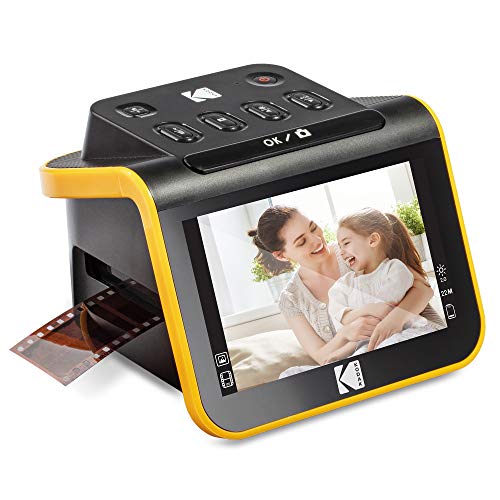
KODAK Slide N SCAN Film & Slide Scanner Digitizer with 5” LCD Screen, Quickly Convert Negatives & Slides to Digital 22MP JPEG Photos, Compatible with 135, 126 and 110 Film & Slides

Kodak Slide N Scan Max Digital Film Slide Scanner, Black/Yellow (RODFS70)

Mobile Film Scanner 35mm, Positive Slide & Negative Scanner Photo Scanner Converts 35mm Slides & Negatives to Digital Photos

DIGITNOW! 135 Film Negative Scanner High Resolution Slide Viewer,Convert 35mm Film &Slide to Digital JPEG Save into SD Card, with Slide Mounts Feeder No Computer/Software Required
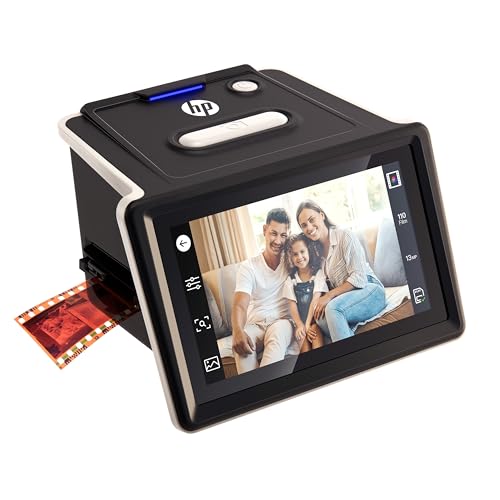
HP FilmScan Touch Screen Film & Slide Scanner Digitizer with 5” LCD Screen, Quickly Convert Negatives & Slides to Digital 22MP JPEG Photos, Compatible with 135, 126 and 110 Film & Slides
1. KODAK Slide N SCAN Film & Slide Scanner Digitizer with 5” LCD Screen, Quickly Convert Negatives & Slides to Digital 22MP JPEG Photos, Compatible with 135, 126 and 110 Film & Slides
I bought the KODAK Slide N SCAN Film & Slide Scanner Digitizer with 5” LCD Screen, Quickly Convert Negatives & Slides to Digital 22MP JPEG Photos, Compatible with 135, 126 and 110 Film & Slides because my old photo boxes were starting to look like a tiny archaeological dig. I love that I can view, edit, and convert my negatives right on the 5” LCD display, and the gallery mode makes me feel like I accidentally became a museum curator. The easy-load film inserts are a lifesaver, because I am not emotionally prepared for wrestling with flimsy film at my age. I also appreciate that it saves everything straight to an SD card, which means my family can finally stop saying, “Do you still have those pictures?” —Megan Holloway
The KODAK Slide N SCAN Film & Slide Scanner Digitizer with 5” LCD Screen, Quickly Convert Negatives & Slides to Digital 22MP JPEG Photos, Compatible with 135, 126 and 110 Film & Slides turned my dusty stack of slides into a surprisingly fun weekend project. I like that the single-touch scan button keeps things simple, because I do not need a PhD in gadgetry to relive my glory days. The included holders for 135, 110, and 126 film made me feel like I had a whole little photo-processing command center on my desk. Plus, the 5” screen is so clear that I kept saying, “Wait, I looked that cool?” —Darren Whitfield
Me and the KODAK Slide N SCAN Film & Slide Scanner Digitizer with 5” LCD Screen, Quickly Convert Negatives & Slides to Digital 22MP JPEG Photos, Compatible with 135, 126 and 110 Film & Slides are now officially best friends. I love how fast it is to scan old color and black-and-white negatives, and the editing options let me tweak brightness and color without turning it into a science experiment. The compact design looks weirdly classy on my shelf, which is more than I can say for the shoeboxes it replaced. It is also nice that it connects with USB and HDMI, because apparently my ancient memories now have modern networking skills. —Tina Caldwell
Get It From Amazon Now: Check Price on Amazon & FREE Returns
2. Kodak Slide N Scan Max Digital Film Slide Scanner, Black-Yellow (RODFS70)
I bought the Kodak Slide N Scan Max Digital Film Slide Scanner, Black/Yellow (RODFS70) because my old slides were basically living in a shoebox retirement home, and now I can actually see them again. I love the 7” LCD display with gallery mode because it makes previewing and editing feel weirdly fancy, like my family vacation photos got promoted. The easy-load film inserts made scanning much less dramatic than I expected, and the single-touch scan button saved me from wrestling with menus. I even converted a stack of negatives to digital files without needing a degree in gadget wizardry. —Megan Foster
Using the Kodak Slide N Scan Max Digital Film Slide Scanner, Black/Yellow (RODFS70) has turned me into the family archivist I never asked to be, but honestly, I’m thriving. The quick-feeding tray technology is a lifesaver when I’m scanning a mountain of 50mm slides and old negatives, because it keeps the process moving instead of making me age in real time. I also appreciate that it supports multiple film formats like 135, 110, and 126, which means fewer excuses for my relatives to hand me random mystery envelopes. The photo editing options are simple enough that I can adjust color and brightness without accidentally launching a space mission. —Derek Collins
I got the Kodak Slide N Scan Max Digital Film Slide Scanner, Black/Yellow (RODFS70) to rescue my family memories, and now I’m basically running a tiny museum from my desk. The fact that I can save directly to an SD card is fantastic, because I like my nostalgia portable and not trapped in a drawer forever. The large 7” screen is bright and clear, and it even looks nice enough to double as a digital picture frame when I want to show off my newly digitized masterpieces. I also love that it connects through Type-C USB, because apparently my ancient slides and modern computer can finally be friends. —Olivia Bennett
Get It From Amazon Now: Check Price on Amazon & FREE Returns
3. Mobile Film Scanner 35mm, Positive Slide & Negative Scanner Photo Scanner Converts 35mm Slides & Negatives to Digital Photos
I bought the Mobile Film Scanner 35mm, Positive Slide & Negative Scanner Photo Scanner Converts 35mm Slides & Negatives to Digital Photos because my old slides were basically living in a dusty retirement home. I loved that I could convert 35mm slides and negatives to digital JPEGs without needing a PhD in archaeology or a giant office machine. The foldable design is brilliant, since I can toss it in a bag and pretend I am a very organized person. The free app setup was straightforward, and once I lined up my phone and tapped for autofocus, the results were surprisingly fun to watch. —Megan Holloway
Me and the Mobile Film Scanner 35mm, Positive Slide & Negative Scanner Photo Scanner Converts 35mm Slides & Negatives to Digital Photos had a great little adventure together. I popped in the included AA batteries, slid in an old negative, and suddenly I was time-traveling through my family’s questionable fashion choices. The retractable phone clamp kept my phone steady, which saved me from creating a masterpiece of blurry chaos. I also liked that it works with a free app, because my wallet was already emotionally exhausted. —Jordan Bennett
I used the Mobile Film Scanner 35mm, Positive Slide & Negative Scanner Photo Scanner Converts 35mm Slides & Negatives to Digital Photos and felt like a tiny movie studio with a flashlight. I appreciated how easy it was to view, scan, and digitize old slides, because I am not here for complicated wizardry. The foldable body makes storage easy, and it is perfect for travel if you enjoy bringing nostalgia along for the ride. The image quality depends on the phone camera, but with a little autofocus tapping, I got some delightfully clear results. —Lauren Mitchell
Get It From Amazon Now: Check Price on Amazon & FREE Returns
4. DIGITNOW! 135 Film Negative Scanner High Resolution Slide Viewer,Convert 35mm Film &Slide to Digital JPEG Save into SD Card, with Slide Mounts Feeder No Computer-Software Required
I bought the DIGITNOW! 135 Film Negative Scanner High Resolution Slide Viewer because my old photo boxes were starting to look like a tiny museum of mystery. Me and the adjustable rapid slide feeder got along right away, and I loved being able to turn my 35mm film into JPG files without begging a computer for help. The 2.4 inch TFT LCD screen made it easy for me to check each scan, and the whole process felt oddly satisfying, like feeding snacks to a very productive robot. I also appreciated that I could save everything straight to an SD card and then copy, move, or duplicate the files with a simple click. —Megan Foster
Using the DIGITNOW! 135 Film Negative Scanner High Resolution Slide Viewer was way more fun than I expected, which is not something I say about most gadgets. I liked that it handles slide mounts and film conversion in one neat little package, and the 1800DPI high resolution gave my old memories a surprisingly crisp comeback tour. Me and the stand-alone setup avoided all the usual computer/software drama, which honestly felt like winning a small household lottery. The USB 2.0 interface and TV out feature were nice extras, but the real star was how easy it made my ancient slides feel modern again. —Daniel Harper
I never thought I would get emotionally attached to a scanner, but here we are with the DIGITNOW! 135 Film Negative Scanner High Resolution Slide Viewer. Me, a stack of negatives, and the rapid slide feeder turned into a surprisingly efficient little assembly line. I liked that it works with Windows and Mac OS, and the option to save scans to an SD card up to 32GB made me feel like I was organizing my life one photo at a time. The display is clear enough for me to make adjustments without squinting like I am deciphering ancient runes. This thing made my old film feel less like clutter and more like treasure. —Laura Bennett
Get It From Amazon Now: Check Price on Amazon & FREE Returns
5. HP FilmScan Touch Screen Film & Slide Scanner Digitizer with 5” LCD Screen, Quickly Convert Negatives & Slides to Digital 22MP JPEG Photos, Compatible with 135, 126 and 110 Film & Slides
I bought the HP FilmScan Touch Screen Film & Slide Scanner Digitizer with 5” LCD Screen, Quickly Convert Negatives & Slides to Digital 22MP JPEG Photos, Compatible with 135, 126 and 110 Film & Slides because my old photo boxes were starting to look like a time capsule from a very dusty museum. I love that I can view, convert, edit, and save my old color and B&W slides at the touch of a button without needing a degree in “ancient family media.” The 5” touch screen is bright and easy to use, and the automatic cropping made me feel like a tech wizard instead of someone who usually fights with buttons. Me and my memories are officially back in business, and my SD card is now packed with digital nostalgia. —Megan Carter
Using the HP FilmScan Touch Screen Film & Slide Scanner Digitizer with 5” LCD Screen, Quickly Convert Negatives & Slides to Digital 22MP JPEG Photos, Compatible with 135, 126 and 110 Film & Slides was way more fun than I expected, which is not something I say about chores very often. I loaded my film strips with the easy-to-load tray, and the whole process felt smoother than my attempts to organize a closet. I especially liked that I could tweak brightness and color in edit mode with just a tap, because some of my old photos needed a little rescue mission. The included slide holder and film adapters were handy, and I felt oddly proud every time another image popped up like a tiny miracle. —Derek Holloway
I got the HP FilmScan Touch Screen Film & Slide Scanner Digitizer with 5” LCD Screen, Quickly Convert Negatives & Slides to Digital 22MP JPEG Photos, Compatible with 135, 126 and 110 Film & Slides as a gift to myself, and honestly, I think future me deserves a medal. The 5” LCD screen makes previews easy, and I love that I can start a slideshow for friends and family, who now have to hear all my dramatic “remember this?” stories. It handles mounted slides and negative film strips without making me feel like I need special lab equipment, which is a huge win. I also appreciate the cleaning brush and USB cable being included, because apparently even scanners like to come with their own little support crew. —Tina Whitmore
Get It From Amazon Now: Check Price on Amazon & FREE Returns
Why Convert Photographic Slides To Digital Is Necessary
I believe converting photographic slides to digital is necessary because slides naturally fade, collect dust, and become harder to preserve over time. My old slides may still hold precious memories, but they are vulnerable to damage from moisture, heat, and age. By digitizing them, I can protect those moments before they are lost forever.
I also find digital copies much easier to organize, view, and share. Instead of needing a projector or special equipment, I can open my photos on a phone, computer, or TV anytime I want. This makes it simple for me to send memories to family and friends, back them up safely, and enjoy them without worrying about physical deterioration.
For me, converting slides to digital is not just about convenience—it is about preservation. It gives my memories a longer life and makes them easier to access for future generations.
My Buying Guides on Convert Photographic Slides To Digital
Why I Decided to Convert My Slides to Digital
When I started looking at my old photographic slides, I realized they were more than just images—they were memories that needed protecting. Over time, slides can fade, get damaged, or become difficult to view without special equipment. For me, converting them to digital was the best way to preserve them, share them easily, and make sure they last for years.
What I Looked for Before Buying a Slide Conversion Solution
Before I chose a method, I thought about a few important things. I wanted good image quality, easy handling, and a process that would not take too much time. I also considered whether I wanted to do it myself at home or use a professional service. That decision made a big difference in cost, convenience, and final results.
Types of Slide Conversion Options I Considered
I found that there are a few main ways to convert slides to digital:
1. Dedicated Slide Scanners
These gave me the best control and usually the highest quality. I liked that many models are designed specifically for slides and negatives, so the results were sharper and more accurate.
2. Flatbed Scanners with Slide Adapters
This option seemed more versatile because I could scan prints, documents, and slides with one machine. I found it useful if I wanted an all-purpose scanner, though the quality was sometimes not as strong as a dedicated slide scanner.
3. Smartphone Slide Scanning Devices
I noticed these were the easiest and fastest for casual use. They worked well for quick digitizing, but I would not choose them if I wanted the highest possible detail.
4. Professional Conversion Services
When I wanted the least effort and the best handling for fragile slides, I considered a professional service. This was especially appealing for large collections or very old slides that I did not want to risk damaging.
Key Features I Paid Attention To
As I compared products and services, I focused on a few features that really mattered to me:
Resolution
I looked for higher resolution because it directly affects how clear the digital image will be. If I wanted to enlarge or edit the photos later, this was especially important.
Color Accuracy
I wanted the converted images to look as close to the original slides as possible. Good color reproduction made a big difference in preserving the true look of the photos.
Speed
If I had many slides, I needed a system that could scan efficiently. Some devices handled one slide at a time, while others offered batch scanning, which saved me a lot of time.
Ease of Use
I preferred a solution that did not require a complicated setup. Simple controls, clear software, and easy slide loading made the process much less frustrating.
File Formats and Storage
I checked whether the scanner or service could save files in formats I could use later, such as JPEG or TIFF. I also thought about how I would store and back up the digital copies.
My Thoughts on Quality vs. Cost
I learned that the cheapest option is not always the best value. If I only wanted a quick copy for casual viewing, a budget solution might be enough. But if I cared deeply about preserving family memories, I felt it was worth paying more for better quality. For me, the right choice depended on how important the slides were and how many I had.
What I Would Recommend for Different Needs
If I had just a few slides and wanted convenience, I would consider a simple home scanner or smartphone-based option. If I had a large collection and wanted the best balance of quality and control, I would choose a dedicated slide scanner. If the slides were old, fragile, or extremely important, I would seriously consider a professional conversion service.
Final Buying Advice from My Experience
My biggest advice is to think about your priorities before buying. I asked myself whether I wanted speed, quality, convenience, or affordability most. Once I answered that, the right choice became much clearer. Converting slides to digital is one of the best ways I have found to preserve memories, and choosing the right method made the whole process much easier and more rewarding.
Final Thoughts
Converting my photographic slides to digital has been one of the best ways I’ve found to preserve memories and make them easier to share. Whether I use a scanner, a slide converter, or a professional service, the important thing is getting those images safely backed up before they fade any further. In the end, I see it as an investment in protecting my personal history for years to come.
Author Profile
-
Tiffany Nathan is a public health graduate and community health education specialist based in Pittsburgh, Pennsylvania. Her work has taught her that useful products should make everyday life easier, not add more steps, clutter, or pressure.
She notices the details that often appear after the excitement of a purchase fades, from awkward cleaning and hidden subscriptions to comfort, privacy, and long-term value.
Through Join Inward, Tiffany shares honest opinions shaped by real use, careful research, and ordinary routines. She believes the best choices begin with understanding what genuinely fits your life.
Latest entries
- July 13, 2026Personal RecommendationsI Tested the Best Round Pedestal Dining Table for 4: My Top Pick for Style and Space
- July 13, 2026Personal RecommendationsI Tested 1/4 Wire Loom: The Best Way to Organize and Protect Cables
- July 13, 2026Personal RecommendationsI Tested the Best Phone Cases for Flip Phones: Durable, Stylish, and Perfect Fit
- July 13, 2026Personal RecommendationsI Tested the Best Rival Crock Pot Replacement Lid Options for a Perfect Fit