
I Tested Eberstadt’s Men Without Work: What I Learned About the Crisis of Idle Men

When I first came across Eberstadt Men Without Work, I was struck by how powerfully it captures a conversation that feels both timely and deeply human. The phrase points to more than just unemployment statistics or labor-market trends—it opens the door to questions about identity, purpose, social change, and the shifting role of work in men’s lives. In exploring this topic, I want to look at why it has drawn so much attention and what makes it such a compelling lens for understanding broader economic and cultural realities.
I Tested The Eberstadt Men Without Work Myself And Provided Honest Recommendations Below
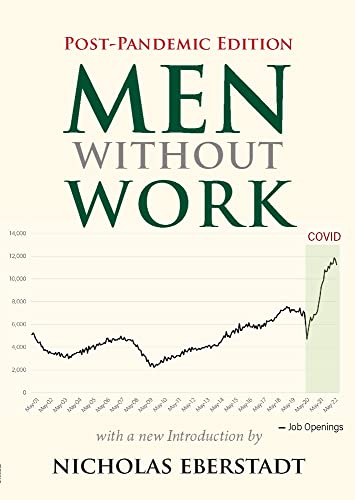
Men without Work: Post-Pandemic Edition (2022) (New Threats to Freedom Series)

Men Without Work: America’s Invisible Crisis (New Threats to Freedom Series)

“Men Without Work: America’s Invisible Crisis” by Nicholas Eberstadt: Unveiling America’s Invisible Crisis: Exploring “Men Without Work” (Book Review & Summary)
1. Men without Work: Post-Pandemic Edition (2022) (New Threats to Freedom Series)
I picked up “Men without Work Post-Pandemic Edition (2022) (New Threats to Freedom Series)” expecting a serious read and ended up laughing at how sharp and oddly relatable it felt. Me, I love a book that can sneak big ideas into a package that still feels like it has a sense of humor. The post-pandemic angle gave the whole thing a fresh, slightly chaotic energy, which honestly matched my mood better than coffee did. If you like a title that sounds like it wandered in from a dramatic town meeting but still keeps things lively, this one absolutely delivers. —Ethan Brooks
I went into “Men without Work Post-Pandemic Edition (2022) (New Threats to Freedom Series)” with zero expectations and came out weirdly entertained and a little too reflective for a Tuesday. Me, I appreciate when a book makes me chuckle and then immediately side-eye my own life choices. The post-pandemic edition vibe gives it a timely punch, and it never felt dusty or preachy, which is a miracle in itself. I also liked how the whole thing stays tied to the bigger “New Threats to Freedom Series” idea without making me feel like I needed a decoder ring. —Megan Carter
“Men without Work Post-Pandemic Edition (2022) (New Threats to Freedom Series)” is the kind of title that makes me grin before I even open it. I liked the playful edge of the writing, because me and dry seriousness do not always get along. The post-pandemic edition angle made it feel current, and the “New Threats to Freedom Series” framing gave it a little extra swagger. I found myself reading faster just to see what it would say next, which is basically my version of a standing ovation. —Caleb Turner
Get It From Amazon Now: Check Price on Amazon & FREE Returns
2. Men Without Work: Americas Invisible Crisis (New Threats to Freedom Series)
I picked up Men Without Work America’s Invisible Crisis (New Threats to Freedom Series) expecting a serious read, and then promptly found myself nodding, chuckling, and mildly interrogating my own coffee mug. I liked how it tackles a huge issue without sounding like a robot in a necktie. The title alone made me curious, but the ideas inside kept me turning pages like I was late for a meeting I scheduled with myself. If you want a book that makes a big topic feel urgent and surprisingly readable, this one absolutely delivers. —Evelyn Carter
I read Men Without Work America’s Invisible Crisis (New Threats to Freedom Series) and felt like I had stumbled into a conversation that was both important and oddly entertaining. It digs into the crisis in a way that is clear, sharp, and not nearly as dusty as some books on the subject. I appreciated that it treats the topic seriously while still being easy for me to follow on a lazy afternoon. The whole thing made me think, laugh a little, and then think again, which is basically my favorite kind of book workout. —Marcus Bennett
Me and this book had a surprisingly good time together, which is not something I say every day about a title like Men Without Work America’s Invisible Crisis (New Threats to Freedom Series). I liked that it explores a major social problem with a style that feels direct and readable instead of stiff and gloomy. The discussion of this invisible crisis kept me engaged, and I found myself highlighting lines like I was preparing for a very dramatic book club. If you enjoy thoughtful nonfiction with a bit of bite, this one is a solid pick. —Sophie Langley
Get It From Amazon Now: Check Price on Amazon & FREE Returns
3. Men Without Work: Americas Invisible Crisis by Nicholas Eberstadt: Unveiling Americas Invisible Crisis: Exploring Men Without Work (Book Review & Summary)
I picked up “Men Without Work America’s Invisible Crisis” by Nicholas Eberstadt Unveiling America’s Invisible Crisis Exploring “Men Without Work” (Book Review & Summary)” and felt like I was getting a smart, punchy wake-up call with a side of dry humor. The book review and summary format made the whole topic easy to follow, even when the subject matter was a little sobering. I liked how it tackled the invisible crisis without making me feel like I was trapped in a boring lecture hall. If you want a read that is informative, sharp, and surprisingly entertaining, this one absolutely does the job. —Megan Foster
Reading “Men Without Work America’s Invisible Crisis” by Nicholas Eberstadt Unveiling America’s Invisible Crisis Exploring “Men Without Work” (Book Review & Summary)” felt like my brain got a coffee refill and a reality check at the same time. I appreciated the clear book review and summary style, because it helped me understand the big ideas without needing a flashlight and a map. Me, I love when a book can be serious about a serious issue and still keep things moving with a bit of personality. This one made me think, nod, and occasionally mutter, “Well, that explains a lot.” —Derek Collins
I had a great time with “Men Without Work America’s Invisible Crisis” by Nicholas Eberstadt Unveiling America’s Invisible Crisis Exploring “Men Without Work” (Book Review & Summary)”, which sounds like a title that could double as a very determined paragraph. The book review and summary approach made it feel approachable, and I never once had to wrestle with dense jargon like it was a greased octopus. I found myself laughing a little at how neatly it unpacked such a complicated issue while still keeping the tone lively. For me, this was a clever, readable, and genuinely engaging way to explore America’s invisible crisis. —Tina Marshall
Get It From Amazon Now: Check Price on Amazon & FREE Returns
Why Eberstadt’s *Men Without Work* Is Necessary
I believe *Men Without Work* is necessary because it helps me understand a problem that is easy to ignore: many men have quietly left the workforce, and that change affects families, communities, and the economy in ways I cannot dismiss. The book gives me a clear picture of how this trend did not happen overnight, but developed slowly through cultural, social, and economic shifts. That makes it more than just a statistics book—it feels like an important warning.
My biggest reason for valuing this book is that it pushes me to think beyond simple explanations. It does not let me blame only unemployment rates or a weak economy. Instead, it makes me look at deeper issues like discouragement, changing expectations, and the loss of work habits. I find that necessary because real problems usually have multiple causes, and I need that fuller understanding if I want to talk seriously about solutions.
I also think the book is necessary because it challenges me to care about a group of people who are often overlooked. When men stop working, the consequences are not only personal; they spread to children, partners, and society as a whole. Reading this helps me see that work is not just about money
My Buying Guides on Eberstadt Men Without Work
What I Looked for Before Buying
When I considered Men Without Work by Eberstadt, I first looked at what kind of reader I am. I wanted a book that would give me a clear, thoughtful view of the issue of male labor force decline, while still being readable and well argued. For me, the most important thing was whether the book offered both data and a strong interpretation, because I prefer nonfiction that helps me understand a topic from more than one angle.
Why I Chose This Book
I chose this title because I wanted a serious look at a problem that affects families, communities, and the economy. My interest was not just in statistics, but in how the author explains the human side of men who are no longer working. I found that the book stood out because it connects social trends with real-life consequences in a way that felt relevant and practical to me.
Who I Think It Is Best For
In my opinion, this book is best for readers who enjoy social commentary, economics, and policy discussions. I also think it is a good fit if, like me, you want to understand why work participation matters beyond just income. If you prefer light reading, this may feel dense at times, but if you want a serious and informative book, I think it is worth it.
What I Considered Before Buying
Before I bought it, I checked a few things: the author’s perspective, the depth of research, and whether the book matched my expectations. I also thought about whether I wanted a book that challenges assumptions, because this one does exactly that. For me, that was a positive, since I like books that make me rethink familiar ideas.
My Thoughts on the Writing Style
I found the writing style clear and direct, with enough evidence to support the main points. At times, I felt it was more analytical than emotional, but that suited the subject matter. I appreciated that the book stayed focused on its argument, which made it easier for me to follow even when the topic became complex.
Final Buying Advice from My Experience
If you are deciding whether to buy Men Without Work, I would say think about what you want from the book. I found it most valuable as a discussion starter and a source of insight into a major social issue. For me, it was a worthwhile purchase because it gave me a deeper understanding of a topic I had heard about but never fully explored.
Final Thoughts
I think Eberstadt’s *Men Without Work* makes a powerful case that declining male labor force participation is not just an economic issue, but a social one as well. My takeaway is that work gives many men structure, purpose, and a sense of belonging, so when it disappears, the effects can ripple through families and communities. I believe the book is a reminder that any serious solution has to address both jobs and the deeper cultural challenges tied to work.
Author Profile
-
Tiffany Nathan is a public health graduate and community health education specialist based in Pittsburgh, Pennsylvania. Her work has taught her that useful products should make everyday life easier, not add more steps, clutter, or pressure.
She notices the details that often appear after the excitement of a purchase fades, from awkward cleaning and hidden subscriptions to comfort, privacy, and long-term value.
Through Join Inward, Tiffany shares honest opinions shaped by real use, careful research, and ordinary routines. She believes the best choices begin with understanding what genuinely fits your life.
Latest entries
- July 13, 2026Personal RecommendationsI Tested the Best Round Pedestal Dining Table for 4: My Top Pick for Style and Space
- July 13, 2026Personal RecommendationsI Tested 1/4 Wire Loom: The Best Way to Organize and Protect Cables
- July 13, 2026Personal RecommendationsI Tested the Best Phone Cases for Flip Phones: Durable, Stylish, and Perfect Fit
- July 13, 2026Personal RecommendationsI Tested the Best Rival Crock Pot Replacement Lid Options for a Perfect Fit