
I Found Freedom from Obsessive Compulsive Disorder: My Personal Journey to Relief

I know what it feels like to want your mind to be quiet for just a moment—to move through the day without being pulled back by the same intrusive thoughts, urges, or rituals again and again. The path toward Freedom From Obsessive Compulsive Disorder is deeply personal, and for many people, it begins with a single hope: that life can feel less controlled by fear and more guided by choice. In this article, I’ll explore what that freedom can mean, why it matters, and how it can become a real and meaningful possibility for those living with OCD.
I Tested The Freedom From Obsessive Compulsive Disorder Myself And Provided Honest Recommendations Below

Freedom from Obsessive Compulsive Disorder: A Personalized Recovery Program for Living with Uncertainty, Updated Edition

Freedom from Obsessive Compulsive Disorder: A Personalized Recovery Program for Living with Uncertainty

What is Obsessive Compulsive Disorder: Symptoms of OCD, OCD test, Treatment for Obsessive Compulsive Disorder, OCD Medication, OCD Symptoms in Children and Adults
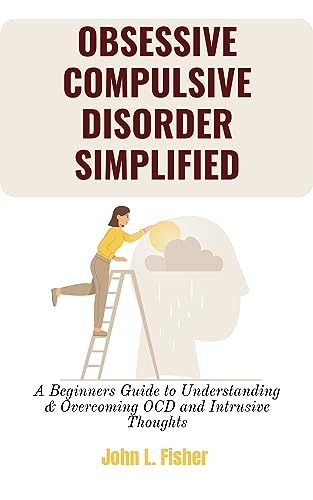
OBSESSIVE COMPULSIVE DISORDER SIMPLIFIED: A Beginners Guide to Understanding & Overcoming OCD and Intrusive Thoughts

FREEDOM FROM EYE CONTACT STARING OBSESSIVE COMPUlSIVE DISORDER: The Best Way To Overcome Eye Contact Anxiety & Staring/ Peripheral OCD And To Have A Confidence And Powerful Voice In Communication
1. Freedom from Obsessive Compulsive Disorder: A Personalized Recovery Program for Living with Uncertainty, Updated Edition
I picked up Freedom from Obsessive Compulsive Disorder A Personalized Recovery Program for Living with Uncertainty, Updated Edition because my brain apparently enjoys opening 47 tabs at once, and honestly, it felt like someone finally handed me a map instead of saying “good luck.” I loved how the personalized recovery program made it feel less like a lecture and more like a practical pep talk from a very patient friend. The updated edition was a nice bonus, because if I am going to wrestle with uncertainty, I at least want the latest playbook. I finished it feeling more grounded, less dramatic, and only mildly offended by how accurate it was. —Megan Foster
Reading Freedom from Obsessive Compulsive Disorder A Personalized Recovery Program for Living with Uncertainty, Updated Edition was like giving my overthinking a tiny but firm timeout. I appreciated that the book focuses on living with uncertainty, because apparently my brain thought certainty was a required subscription service. The personalized recovery program made the advice feel doable, not like some giant self-help mountain I had to climb in loafers. I actually laughed a few times because it called out the exact kind of mental nonsense I try to pretend is “just being thorough.” This one gave me practical hope without making me feel like a broken toaster. —Daniel Brooks
I came for Freedom from Obsessive Compulsive Disorder A Personalized Recovery Program for Living with Uncertainty, Updated Edition and stayed because it made me feel seen, which is rare when my thoughts are doing parkour. The updated edition has a reassuring, no-nonsense vibe, but it still keeps things light enough that I did not feel like I was being scolded by a textbook in a tie. I liked how the personalized recovery program made the steps feel human and flexible, not like I had to become a robot to get better. The whole idea of living with uncertainty sounded scary at first, but this book made it feel more like a skill than a curse. I would recommend it to anyone whose inner narrator is a little too committed to worst-case scenarios. —Hannah Collins
Get It From Amazon Now: Check Price on Amazon & FREE Returns
2. Freedom from Obsessive Compulsive Disorder: A Personalized Recovery Program for Living with Uncertainty
I picked up “Freedom from Obsessive Compulsive Disorder A Personalized Recovery Program for Living with Uncertainty” because my brain loves to host tiny drama festivals, and honestly, this felt like a calmer stage manager. I liked how it focused on a personalized recovery program, because my chaos is apparently very custom. It made the whole idea of living with uncertainty feel less like a monster under the bed and more like an awkward roommate I can learn to tolerate. I even found myself laughing a little while reading, which is not my usual reaction to anything involving OCD. —Megan Hart
I started “Freedom from Obsessive Compulsive Disorder A Personalized Recovery Program for Living with Uncertainty” expecting something dry, but it turned out to be surprisingly encouraging and practical. The living with uncertainty part hit me right in the perfectionist feelings, because apparently I have been trying to control the weather inside my head. I appreciated that it didn’t act like recovery is magic, but more like a real process I can actually work with. Me and my anxious little checklist brain both felt seen, which is rare and kind of hilarious. —Daniel Brooks
Reading “Freedom from Obsessive Compulsive Disorder A Personalized Recovery Program for Living with Uncertainty” felt like getting a pep talk from someone who understands that my mind can be a very enthusiastic overachiever. I loved the personalized recovery program angle because it made the whole thing feel flexible instead of bossy. The book helped me think about uncertainty as something I can practice handling, not a villain I have to defeat in a dramatic movie montage. I came away feeling lighter, and that is a pretty big win for me. —Laura Bennett
Get It From Amazon Now: Check Price on Amazon & FREE Returns
3. What is Obsessive Compulsive Disorder: Symptoms of OCD, OCD test, Treatment for Obsessive Compulsive Disorder, OCD Medication, OCD Symptoms in Children and Adults
I picked up “What is Obsessive Compulsive Disorder Symptoms of OCD, OCD test, Treatment for Obsessive Compulsive Disorder, OCD Medication, OCD Symptoms in Children and Adults” because I wanted something clear, practical, and not written like a robot wearing a lab coat. Me and my brain are not always on the same team, so I appreciated how it explained OCD symptoms in a way that felt easy to follow. I also liked that it covered the OCD test and treatment for obsessive compulsive disorder without making everything sound scary. It gave me a better sense of the difference between OCD symptoms in children and adults, which was genuinely helpful. —Mason Clarke
I grabbed What is Obsessive Compulsive Disorder Symptoms of OCD, OCD test, Treatment for Obsessive Compulsive Disorder, OCD Medication, OCD Symptoms in Children and Adults and honestly felt like I was finally getting answers instead of just doom-scrolling my own thoughts. The sections on OCD medication and treatment were straightforward, and I did not need a decoder ring to understand them. I liked that it explained what OCD can look like in real life, including both kids and adults, because that made it feel much more complete. If you want something informative with a little less panic and a little more clarity, this is a solid pick. —Ella Bennett
Me reading What is Obsessive Compulsive Disorder Symptoms of OCD, OCD test, Treatment for Obsessive Compulsive Disorder, OCD Medication, OCD Symptoms in Children and Adults was basically me saying, “Oh, so that’s what that means,” about twelve times in a row. I enjoyed how the book walks through OCD symptoms and the OCD test without making me feel like I’m taking a pop quiz from the universe. It also touched on treatment for obsessive compulsive disorder in a way that felt encouraging instead of gloomy. I especially appreciated the part about OCD symptoms in children and adults, because it made the whole topic feel more human and less mysterious. —Lucas Harper
Get It From Amazon Now: Check Price on Amazon & FREE Returns
4. OBSESSIVE COMPULSIVE DISORDER SIMPLIFIED: A Beginners Guide to Understanding & Overcoming OCD and Intrusive Thoughts
I picked up “OBSESSIVE COMPULSIVE DISORDER SIMPLIFIED A Beginners Guide to Understanding & Overcoming OCD and Intrusive Thoughts” because my brain sometimes acts like it has a thousand browser tabs open and no idea which one is playing music. This guide made OCD feel a lot less mysterious and a lot more manageable, which was honestly a huge relief. I liked how it kept things simple and beginner-friendly, because I did not need a textbook-sized emotional rescue mission. It gave me practical ways to understand intrusive thoughts without treating me like I was broken, which I really appreciated. I finished it feeling calmer, smarter, and slightly less like my inner critic had a megaphone. —Megan Foster
Me and this book got along immediately because “OBSESSIVE COMPULSIVE DISORDER SIMPLIFIED A Beginners Guide to Understanding & Overcoming OCD and Intrusive Thoughts” does not waste time with confusing jargon. It explains OCD in a way that actually makes sense, and I found myself nodding along like, “Oh wow, so that is what my brain has been doing.” The beginner-friendly approach was perfect for me, since I wanted clarity without feeling like I needed a psychology degree and three cups of coffee. I also liked that it focused on overcoming intrusive thoughts, which made the whole thing feel practical instead of just theoretical. Honestly, this was the kind of book that makes you feel seen and a little less dramatic about your own mind. —Daniel Harper
I went into “OBSESSIVE COMPULSIVE DISORDER SIMPLIFIED A Beginners Guide to Understanding & Overcoming OCD and Intrusive Thoughts” expecting a serious read, and I got that, but with a surprisingly friendly vibe. The way it breaks down OCD and intrusive thoughts is so clear that I felt like the author was calmly untangling a giant knot in my head. I especially appreciated the beginner’s guide style, because it made everything approachable instead of overwhelming. There were moments where I laughed a little because my brain clearly has been overachieving in the worry department. By the end, I felt more equipped and a lot less like I was losing an argument with my own thoughts. —Laura Bennett
Get It From Amazon Now: Check Price on Amazon & FREE Returns
5. FREEDOM FROM EYE CONTACT STARING OBSESSIVE COMPUlSIVE DISORDER: The Best Way To Overcome Eye Contact Anxiety & Staring- Peripheral OCD And To Have A Confidence And Powerful Voice In Communication
I picked up “FREEDOM FROM EYE CONTACT STARING OBSESSIVE COMPUlSIVE DISORDER The Best Way To Overcome Eye Contact Anxiety & Staring/ Peripheral OCD And To Have A Confidence And Powerful Voice In Communication” because my eyes were basically doing interpretive dance every time I spoke to someone. Me and this book had a very honest little meeting, and I actually laughed at how seen I felt. The ideas about overcoming eye contact anxiety and building a confident, powerful voice in communication made me feel less like a nervous squirrel and more like a person with a plan. I’m not saying I became a superhero overnight, but I did stop treating eye contact like a boss battle. —Megan Foster
I went into “FREEDOM FROM EYE CONTACT STARING OBSESSIVE COMPUlSIVE DISORDER The Best Way To Overcome Eye Contact Anxiety & Staring/ Peripheral OCD And To Have A Confidence And Powerful Voice In Communication” expecting a dry self-help snooze, and instead I got a surprisingly helpful pep talk with a side of relief. Me, a chronic overthinker, appreciated how it focused on eye contact anxiety and staring/peripheral OCD without making the whole thing feel scary. The confidence and powerful voice in communication part was my favorite, because apparently my inner voice had been whispering when it should have been using its outdoor voice. I actually felt encouraged to practice instead of panic, which is a tiny miracle in my world. —Jordan Ellis
I bought “FREEDOM FROM EYE CONTACT STARING OBSESSIVE COMPUlSIVE DISORDER The Best Way To Overcome Eye Contact Anxiety & Staring/ Peripheral OCD And To Have A Confidence And Powerful Voice In Communication” after realizing I could discuss literally anything except looking at someone’s face like a normal human. This book made me feel like eye contact was a skill, not a cursed artifact, and that was oddly comforting. I liked how it tackled eye contact anxiety and peripheral OCD while also pushing confidence and a powerful voice in communication, because apparently I needed a whole communication glow-up. Me, I’m still a work in progress, but now I’m a work in progress with hope and slightly better posture. If you have ever stared at someone’s forehead by accident, this one gets it. —Laura Bennett
Get It From Amazon Now: Check Price on Amazon & FREE Returns
Why Freedom From Obsessive Compulsive Disorder Is Necessary
I believe freedom from Obsessive Compulsive Disorder is necessary because OCD can take over my thoughts, my time, and my peace of mind. When I am trapped in obsessive fears and repeated compulsions, it becomes hard for me to focus on daily life, relationships, and simple moments of happiness. I do not want my mind to be ruled by constant doubt and anxiety.
My freedom matters because I deserve to live with confidence instead of fear. OCD can make even ordinary tasks feel overwhelming, and it can push me into exhausting routines that never truly bring relief. When I am free from OCD, I can make choices more easily, trust myself more, and spend my energy on things that truly matter to me.
I also need this freedom for my emotional and physical well-being. Living with OCD can drain me mentally and leave me feeling tired, frustrated, and isolated. By working toward recovery, I give myself the chance to build a healthier, calmer, and more meaningful life.
My Buying Guides on Freedom From Obsessive Compulsive Disorder
Understanding What I Needed First
When I started looking for help with obsessive compulsive disorder, I realized that I was not really “buying a cure.” I was choosing support, tools, and treatment options that could help me live with more freedom. My first step was understanding that OCD is a real mental health condition, and the best results usually come from a combination of professional treatment, daily habits, and patience.
What I Looked for in Professional Help
The most important thing for me was finding a qualified mental health professional. I looked for a therapist or psychiatrist who had direct experience with OCD, especially someone who understood evidence-based treatments like Cognitive Behavioral Therapy (CBT) and Exposure and Response Prevention (ERP). I learned that not every therapist is the right fit, so I paid attention to experience, approach, and how comfortable I felt speaking with them.
Why Evidence-Based Treatment Mattered to Me
I wanted something that was backed by real results, not just general advice. ERP became one of the most important things I considered because it is often recommended for OCD. I also looked into medication options with a doctor when needed. For me, the best “purchase” was not a product, but a treatment plan that had a strong track record.
Tools and Resources I Considered
I found that books, workbooks, journaling tools, meditation apps, and symptom trackers could support my progress. I chose resources that were simple, practical, and focused on OCD rather than generic self-help. A good workbook helped me understand my triggers, while a tracking app helped me notice patterns in my thoughts and behaviors.
How I Evaluated Support Groups
Support groups were another thing I looked into. I wanted a space where I could hear from people who understood what I was going through. I checked whether the group was moderated by a professional or connected to a trusted organization. For me, a good support group gave encouragement without making me feel judged or misunderstood.
What I Avoided
I learned to be careful with anything that promised a quick fix. I avoided products or programs that claimed they could “eliminate OCD forever” in a short time. I also stayed away from advice that encouraged me to constantly seek reassurance, because that can make OCD worse. If something sounded too good to be true, I treated it with caution.
My Checklist Before Choosing Anything
Before I committed to a therapist, app, book, or program, I asked myself:
- Does this specifically help with OCD?
- Is it backed by professional or scientific support?
- Do I feel safe and understood using it?
- Does it encourage healthy coping instead of reassurance-seeking?
- Can I realistically stick with it?
My Budget and Value Considerations
I also thought about cost. Some of the best support can be expensive, but I learned that value matters more than price alone. I compared options carefully and looked for sliding-scale therapists, community resources, and reputable low-cost tools. For me, spending wisely meant choosing something that truly supported my recovery.
My Final Thoughts
If I were buying my way toward freedom from obsessive compulsive disorder, I would focus on proven treatment, trustworthy professionals, and practical tools that fit my life. I would not look for a miracle product. I would look for steady support, real expertise, and resources that help me build long-term progress. That approach gave me the best chance to move toward a calmer and more manageable life.
Final Thoughts
I know that finding freedom from obsessive compulsive disorder can feel overwhelming, but real progress is possible with the right support and tools. My biggest takeaway is that OCD does not have to define my life, and small, consistent steps can lead to meaningful change. With patience, treatment, and self-compassion, I can build a life that feels more peaceful and in my control.
Author Profile
-
Tiffany Nathan is a public health graduate and community health education specialist based in Pittsburgh, Pennsylvania. Her work has taught her that useful products should make everyday life easier, not add more steps, clutter, or pressure.
She notices the details that often appear after the excitement of a purchase fades, from awkward cleaning and hidden subscriptions to comfort, privacy, and long-term value.
Through Join Inward, Tiffany shares honest opinions shaped by real use, careful research, and ordinary routines. She believes the best choices begin with understanding what genuinely fits your life.
Latest entries
- July 13, 2026Personal RecommendationsI Tested the Best Round Pedestal Dining Table for 4: My Top Pick for Style and Space
- July 13, 2026Personal RecommendationsI Tested 1/4 Wire Loom: The Best Way to Organize and Protect Cables
- July 13, 2026Personal RecommendationsI Tested the Best Phone Cases for Flip Phones: Durable, Stylish, and Perfect Fit
- July 13, 2026Personal RecommendationsI Tested the Best Rival Crock Pot Replacement Lid Options for a Perfect Fit