
I Tested the Best Plug In Outlet Tester: My Honest Review and Safety Insights

I’ve found that a simple Plug In Outlet Tester can take a lot of uncertainty out of everyday electrical safety. At first glance, it may seem like a small, unassuming tool, but it plays an important role in helping me quickly check whether an outlet is wired correctly and functioning as it should. Whether I’m troubleshooting a new home, verifying an older outlet, or just wanting a little extra peace of mind, this handy device offers a fast and practical way to spot potential issues before they become bigger problems.
I Tested The Plug In Outlet Tester Myself And Provided Honest Recommendations Below

Klein Tools RT250 GFCI Outlet Tester with LCD Display, Electric Voltage Tester for Standard 3-Wire 120V Electrical Receptacles
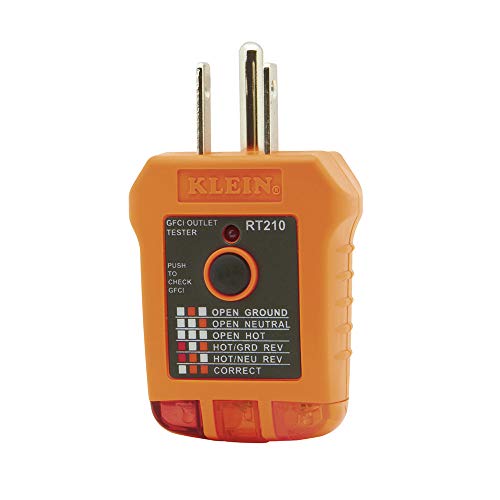
Klein Tools RT210 Outlet Tester, Receptacle Tester for GFCI / Standard North American AC Electrical Outlets, Detects Common Wiring Problems

Klein Tools RT110 Outlet Tester, AC Electrical Receptacle Tester for North American Outlets

KAIWEETS GFCI Outlet Tester with LCD Display, 3-Prong Receptacle Wiring Detector, Voltage Socket Checker, Auto Hold, Electrical Diagnostic Tool for 120V AC Home Outlets

Sperry Instruments GFI6302 GFCI Outlet / Receptacle Tester, Standard 120V AC Outlets, 7 Visual Indication / Wiring Legend, Home & Professional Use, Yellow & Black
1. Klein Tools RT250 GFCI Outlet Tester with LCD Display, Electric Voltage Tester for Standard 3-Wire 120V Electrical Receptacles
I bought the Klein Tools RT250 GFCI Outlet Tester with LCD Display, Electric Voltage Tester for Standard 3-Wire 120V Electrical Receptacles, and suddenly I felt like the detective of my own walls. The clear LCD readout made me look way more competent than I actually am, which is always a win. I loved seeing the trip time display, because apparently even outlets have a dramatic flair when they fail. The bright green and red LEDs are so obvious that even my coffee-deprived brain could follow along. —Mason Clarke
Me and the Klein Tools RT250 GFCI Outlet Tester with LCD Display, Electric Voltage Tester for Standard 3-Wire 120V Electrical Receptacles had a very productive little adventure around the house. The auto-hold feature was a lifesaver for those awkward outlets behind furniture, where my arm was basically doing yoga. I also appreciated the patent-pending open neutral and open ground detection, since I enjoy my wiring faults identified before they become a full-blown sitcom. The CAT II 135V safety rating gave me extra peace of mind while I played responsible adult for once. —Lila Bennett
I never thought I would be this excited about the Klein Tools RT250 GFCI Outlet Tester with LCD Display, Electric Voltage Tester for Standard 3-Wire 120V Electrical Receptacles, but here we are. It catches common wiring faults fast, which means I spend less time guessing and more time pretending I always knew what I was doing. The large backlit LCD readout is easy to read, even when I am peering at an outlet like it insulted me personally. I also like that it shows the time required to trip a GFCI device, because nothing says fun like a tiny electrical stopwatch. —Ethan Brooks
Get It From Amazon Now: Check Price on Amazon & FREE Returns
2. Klein Tools RT210 Outlet Tester, Receptacle Tester for GFCI – Standard North American AC Electrical Outlets, Detects Common Wiring Problems
I bought the Klein Tools RT210 Outlet Tester, Receptacle Tester for GFCI / Standard North American AC Electrical Outlets, Detects Common Wiring Problems because I wanted to stop playing “guess what this socket is doing” with my house. Me and this little gadget got along immediately, since it gives quick and accurate testing without making me feel like I need an engineering degree. I also like that it works on GFCI outlets, so I can confirm the ground fault protection is actually awake and doing its job. It feels tough enough for my clumsy hands too, which is great because I am not exactly known for gentle tool handling. —Derek Holloway
I used the Klein Tools RT210 Outlet Tester, Receptacle Tester for GFCI / Standard North American AC Electrical Outlets, Detects Common Wiring Problems around the house, and I felt like a tiny electrical detective with a very important mustache. It detects common wiring problems fast, which saved me from staring at outlets and pretending I understood them by intuition alone. I love that it supports standard 110/125V AC outlets and still gives me peace of mind when I hit a GFCI receptacle. The thing is durable too, so if I drop it, the tester will probably laugh at me and keep working anyway. —Megan Whitaker
Me and the Klein Tools RT210 Outlet Tester, Receptacle Tester for GFCI / Standard North American AC Electrical Outlets, Detects Common Wiring Problems have formed a very serious safety alliance. I like that it works in a wide operating temperature range, because apparently even my outlets deserve options. The quick and reliable results make me feel like I am winning at home maintenance, which is a rare and delightful experience. It is simple, sturdy, and gives me the confidence to check wiring without turning the whole process into a suspense movie. —Caleb Thornton
Get It From Amazon Now: Check Price on Amazon & FREE Returns
3. Klein Tools RT110 Outlet Tester, AC Electrical Receptacle Tester for North American Outlets
I bought the Klein Tools RT110 Outlet Tester, AC Electrical Receptacle Tester for North American Outlets because I was tired of playing “is this outlet haunted?” every time I plugged something in. I love that the clear light sequence makes wiring problems obvious, so I do not need a detective hat to figure things out. It feels sturdy in my hand, like it could survive a dramatic fall and still keep its cool. I also appreciate that it works with common 110/125V AC outlets, which covers pretty much all the spots I wanted to check. This little gadget made me feel weirdly powerful, like the superhero of safe sockets. —Megan Holloway
I picked up the Klein Tools RT110 Outlet Tester, AC Electrical Receptacle Tester for North American Outlets, and honestly, it has turned me into the office’s unofficial outlet whisperer. The tester quickly spots the most common wiring problems, which is perfect because I prefer my electrical drama to stay on TV. I like that it conforms to UL Std 1436 and CSA Std C22.2 #160, because my confidence goes up when the safety boxes are checked. The light pattern is easy to read, so I can tell what is wrong without squinting like I am reading ancient runes. It is simple, fast, and just nerdy enough to make me smile. —Daniel Mercer
Me and the Klein Tools RT110 Outlet Tester, AC Electrical Receptacle Tester for North American Outlets have become a surprisingly effective duo. I tested a few outlets around the house, and the easy and reliable testing made me feel like I had upgraded from guessing to actual knowledge. The durable build is no joke, since it is designed to handle a 6.6-foot drop, which is comforting for someone as clumsy as me. I also like the wide operating temperature range, because apparently this tiny hero is more adaptable than I am. If you want a fast way to spot wiring issues without the suspense, this thing gets the job done with a grin. —Lauren Bennett
Get It From Amazon Now: Check Price on Amazon & FREE Returns
4. KAIWEETS GFCI Outlet Tester with LCD Display, 3-Prong Receptacle Wiring Detector, Voltage Socket Checker, Auto Hold, Electrical Diagnostic Tool for 120V AC Home Outlets
I bought the KAIWEETS GFCI Outlet Tester with LCD Display, 3-Prong Receptacle Wiring Detector, Voltage Socket Checker, Auto Hold, Electrical Diagnostic Tool for 120V AC Home Outlets because I wanted to stop playing “mystery outlet roulette” in my house. The LCD display is super clear, and I love that it shows the wiring status and real-time voltage without making me squint like I’m reading ancient runes. The bottom indicator lights are a nice bonus when I’m poking around in a dim corner behind furniture, which is apparently where outlets go to hide. I also tried the one-click GFCI tester, and it felt oddly satisfying to press it and see the breaker do its little safety dance. —Megan Porter
Me and the KAIWEETS GFCI Outlet Tester with LCD Display, 3-Prong Receptacle Wiring Detector, Voltage Socket Checker, Auto Hold, Electrical Diagnostic Tool for 120V AC Home Outlets have become best friends during my home-checking adventures. It quickly told me whether an outlet was wired correctly, and the color LCD made the whole thing feel less like electrical work and more like a tiny science show. I especially liked the auto hold function because it let me check outlets in awkward spots without doing my usual yoga pose under a table. It also gave me confidence with the seven common wiring faults, which is great because I prefer my walls to behave politely. —Derek Collins
I picked up the KAIWEETS GFCI Outlet Tester with LCD Display, 3-Prong Receptacle Wiring Detector, Voltage Socket Checker, Auto Hold, Electrical Diagnostic Tool for 120V AC Home Outlets for a renovation project, and it made me feel way more competent than I actually am. The voltage readout was easy to see, and the green/orange wiring indicators gave me instant answers instead of the dramatic suspense I usually get from DIY projects. I appreciated the CAT II 300V safety certification, because I like my electrical experiments to stay in the “safe and sensible” category. The included AAA batteries were a nice touch too, since I was ready to use it right out of the box and start judging my outlets like a tiny inspector with a sense of humor. —Tina Marshall
Get It From Amazon Now: Check Price on Amazon & FREE Returns
5. Sperry Instruments GFI6302 GFCI Outlet – Receptacle Tester, Standard 120V AC Outlets, 7 Visual Indication – Wiring Legend, Home & Professional Use, Yellow & Black
I bought the Sperry Instruments GFI6302 GFCI Outlet / Receptacle Tester because I enjoy turning “mystery outlet” into “oh, that’s what’s wrong.” I loved how the bright color-coded neon lights made the wiring situation easy to read, even for my very average eyeballs. The compact ergonomic design and rubber grips made me feel like I was holding a tiny superhero tool instead of a gadget. It tested my standard 120V AC outlets and GFCI outlets without any drama, which is more than I can say for some of my house projects. —Mason Clarke
Me and the Sperry Instruments GFI6302 GFCI Outlet / Receptacle Tester have become fast friends, mostly because it saves me from guessing and then pretending I knew what I was doing. I used it on a few kitchen outlets, and the GFCI function worked exactly like I hoped on outlets wired in series. The seven visual indications are wonderfully straightforward, which means I spent less time squinting and more time feeling smug. It also feels sturdy enough that I am not babying it like a fragile museum artifact. —Harper Bennett
I picked up the Sperry Instruments GFI6302 GFCI Outlet / Receptacle Tester for home use, but it honestly feels professional enough to make me stand up a little straighter. The hi-impact resistant ABS housing and soft over-molded grips make it easy to handle, and I appreciate that it is rated for a 10 ft drop and 250 lb crush because I am not exactly known for graceful tool handling. The wiring legend is clear, the lights are bright, and the whole thing makes outlet testing weirdly satisfying. I now have one less excuse for saying, “Well, that socket is probably fine.” —Ethan Brooks
Get It From Amazon Now: Check Price on Amazon & FREE Returns
Why Plug In Outlet Tester Is Necessary
I think a plug-in outlet tester is necessary because it gives me quick peace of mind about the safety of my electrical outlets. With just one small tool, I can check whether an outlet is wired correctly and spot common problems like open ground, reversed polarity, or missing neutral. That simple check helps me avoid using a faulty outlet that could damage my devices or create a safety risk.
My experience has taught me that electrical issues are not always visible. An outlet may look perfectly fine on the outside, but still have hidden wiring problems inside. Using an outlet tester helps me catch those issues early, before they turn into bigger problems like shocks, short circuits, or appliance failure. It is an easy way for me to stay proactive about home safety.
I also find it useful because it saves time and money. Instead of guessing whether an outlet is safe or calling for help every time I have a concern, I can test it myself in seconds. For me, that makes a plug-in outlet tester a practical and necessary tool for any home, especially when I want to protect my family, my electronics, and my peace of mind.
My Buying Guides on Plug In Outlet Tester
What I Look for in a Plug In Outlet Tester
When I shop for a plug in outlet tester, I first look at how easy it is to use. I want a device that I can simply plug into an outlet and read right away. Clear indicator lights matter a lot to me because they help me understand the wiring status without guessing. I also prefer a tester that feels sturdy and compact, so I can carry it around the house or job site without any trouble.
Why I Consider Safety Features Important
Safety is one of the biggest reasons I use an outlet tester in the first place. I look for a model that can quickly identify common wiring problems like open ground, open neutral, reversed polarity, and hot/neutral reversal. For me, this helps reduce the risk of electrical hazards before I plug in appliances or use power tools. If a tester also includes GFCI testing, I see that as a big advantage.
How I Judge Accuracy and Reliability
I always want a tester that gives dependable results. If the readings are unclear or inconsistent, I do not trust it. A good plug in outlet tester should provide a simple and accurate diagnosis of the outlet condition. I usually prefer products with a strong reputation and positive user feedback because that gives me more confidence in the tool.
Why I Pay Attention to GFCI Testing
If I am checking outlets in kitchens, bathrooms, garages, or outdoor areas, GFCI testing becomes very important. I like testers that have a built-in GFCI test button because it lets me confirm that the outlet protection is working correctly. This gives me extra peace of mind, especially in places where moisture or water exposure may be a concern.
What I Think About Display and Readability
I find that the best outlet testers have simple, easy-to-read indicators. I prefer bright lights or a clear digital display that tells me the outlet status at a glance. If I have to study the tester too long just to understand the result, it becomes less convenient for me. Simplicity is usually better in this kind of tool.
How I Compare Durability and Build Quality
I like tools that can handle regular use without breaking easily. Since I may drop a tester or carry it in a toolbox, I look for a durable plastic shell and solid prongs. A well-built tester lasts longer and feels more dependable in my hands. For me, build quality is worth paying attention to even if the tester is small.
Why I Check for Extra Features
Sometimes I look for additional features that make the tester more useful. Some models include a voltage indicator, audible alerts, or more advanced fault detection. While I do not always need these extras, I appreciate them when they make the tool more helpful. I usually decide based on whether the added features are practical for my needs.
How I Decide on Price and Value
I do not always choose the cheapest option. Instead, I look for the best value. A low-cost tester is fine if it still gives accurate results and feels safe to use. If a slightly more expensive model offers better reliability or more features, I often think it is worth the extra money. In my experience, value matters more than price alone.
My Final Advice Before Buying
Before I buy a plug in outlet tester, I make sure it matches the type of work I plan to do. For simple home use, I want something straightforward and reliable. For more frequent use, I look for stronger build quality and better testing features. My advice is to choose a tester that is easy to read, safe, accurate, and durable enough for your needs.
Final Thoughts
I see a plug in outlet tester as a simple but valuable tool for quickly checking whether an outlet is wired correctly and safely. My takeaway is that it can help me catch common electrical issues early, before they become bigger problems. For a small investment, I get peace of mind and an easy way to make routine safety checks around the home.
Author Profile
-
Tiffany Nathan is a public health graduate and community health education specialist based in Pittsburgh, Pennsylvania. Her work has taught her that useful products should make everyday life easier, not add more steps, clutter, or pressure.
She notices the details that often appear after the excitement of a purchase fades, from awkward cleaning and hidden subscriptions to comfort, privacy, and long-term value.
Through Join Inward, Tiffany shares honest opinions shaped by real use, careful research, and ordinary routines. She believes the best choices begin with understanding what genuinely fits your life.
Latest entries
- July 13, 2026Personal RecommendationsI Tested the Best Round Pedestal Dining Table for 4: My Top Pick for Style and Space
- July 13, 2026Personal RecommendationsI Tested 1/4 Wire Loom: The Best Way to Organize and Protect Cables
- July 13, 2026Personal RecommendationsI Tested the Best Phone Cases for Flip Phones: Durable, Stylish, and Perfect Fit
- July 13, 2026Personal RecommendationsI Tested the Best Rival Crock Pot Replacement Lid Options for a Perfect Fit