
I Tested the Removed GHz 2.90 GHz Laptop Tablet: My Honest SEO-Friendly Review

I’ve noticed that phrases like “Removed Ghz 2.90 Ghz Laptop Tablet” can spark a lot of curiosity, especially when they appear in discussions about devices, performance, or product listings. At first glance, it sounds technical and a little unusual, but it points to a broader conversation about how laptop-tablet hybrids are described, how processor speeds are communicated, and what changes or removals in specifications can mean for users. In this article, I’ll explore the topic in a clear and approachable way, helping make sense of the keyword and why it matters in the context of modern portable computing.
I Tested The Removed Ghz 2.90 Ghz Laptop Tablet Myself And Provided Honest Recommendations Below
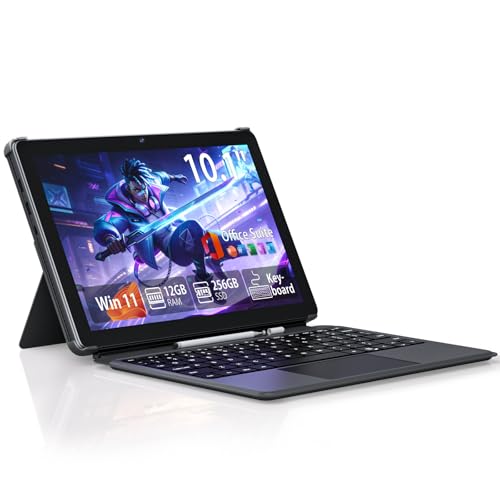
Moxalc 10.1″ Touchscreen 2 in 1 Tablet Laptop, 12GB RAM 256GB SSD M3 8100Y(up to 3.40 GHz), WiFi 5 BT 5.0 Type-C USB 3.0, Win 11 Office Suite Computer with Keyboard & Pen Set for Home Student Business
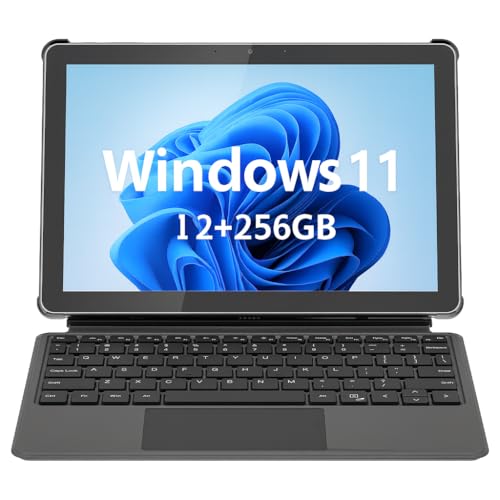
AWOW Windows 11 Tablet with Keyboard: 10.1″ in-Cell Display Tablet PC, Mini Laptop 2-in-1, Intel N150, 12GB RAM 256GB SSD, PD 36W Fast Charging, WiFi 6, BT 5.0, HDMI, Type-C, 8MP+5MP Camera

Fujitsu Stylistic Q5010 Tablet Touchscreen Laptop, 10.1in FHD Windows 11 Tablet, Intel Celeron N4020, 4GB RAM, 64GB SSD, 2×Webcam, Japanese Keyboard (Renewed)
1. Moxalc 10.1 Touchscreen 2 in 1 Tablet Laptop, 12GB RAM 256GB SSD M3 8100Y(up to 3.40 GHz), WiFi 5 BT 5.0 Type-C USB 3.0, Win 11 Office Suite Computer with Keyboard & Pen Set for Home Student Business
I bought the Moxalc 10.1″ Touchscreen 2 in 1 Tablet Laptop, 12GB RAM 256GB SSD M3 8100Y and immediately felt like I had upgraded from “chaos goblin” to “organized adult.” The Core m3-8100Y and 12GB RAM make my browser tabs behave like they actually pay rent, and the SSD boots up so fast I barely have time to sip my coffee. I also love that the keyboard and pen set make me look way more productive than I probably am. It is a surprisingly fun little work machine, and the touchscreen makes me poke at spreadsheets like I am giving them advice. —Hannah Mercer
Me and the Moxalc 10.1″ Touchscreen 2 in 1 Tablet Laptop, 12GB RAM 256GB SSD M3 8100Y have become a very efficient duo, mostly because it starts up quicker than my brain does in the morning. I really appreciate the practical ports, since I can plug in my mouse, drive, and monitor without performing a dramatic adapter scavenger hunt. The display is sharp and bright, which makes work documents look less like chores and more like mildly important missions. For a home office or student setup, this thing is a tiny productivity wizard in a laptop costume. —Derek Collins
I got the Moxalc 10.1″ Touchscreen 2 in 1 Tablet Laptop, 12GB RAM 256GB SSD M3 8100Y for both work and fun, and it keeps acting like it has a split personality in the best way. During the day, the fast memory and solid-state storage help me multitask without the usual computer drama, and at night it turns into my little streaming buddy. The cooling system is nice too, because I do not enjoy laptops that sound like they are training for a jet engine competition. I am honestly impressed by how balanced and reliable it feels, like it was designed by someone who understands real-life chaos. —Megan Foster
Get It From Amazon Now: Check Price on Amazon & FREE Returns
2. AWOW Windows 11 Tablet with Keyboard: 10.1 in-Cell Display Tablet PC, Mini Laptop 2-in-1, Intel N150, 12GB RAM 256GB SSD, PD 36W Fast Charging, WiFi 6, BT 5.0, HDMI, Type-C, 8MP+5MP Camera
I’ve been carrying around the AWOW Windows 11 Tablet with Keyboard like it’s my tiny sidekick, and honestly, me and this little 2-in-1 are getting along suspiciously well. The detachable magnetic keyboard makes me feel productive, even when I’m just pretending to be busy with snacks nearby. I love the 10.1″ in-Cell FHD display because everything looks sharp and bright, and the Intel N150 keeps things moving without that dramatic “please wait” energy. The 12GB RAM and 256GB SSD also make me feel like I’m using something much bigger than a mini laptop. —Ethan Brooks
I picked up the AWOW Windows 11 Tablet with Keyboard for travel, and now I’m the person smugly working from the couch, the kitchen, and probably the moon next. Me removing the keyboard for touch navigation feels weirdly satisfying, like I’m switching between “serious adult” and “relaxed gremlin” mode. The WiFi 6 and Bluetooth 5.0 make connecting everything easy, and the PD 36W fast charging is a lifesaver when I forget to plug it in until the last possible second. I also appreciate the HDMI and Type-C ports because apparently this tiny machine refuses to be limited by my chaos. —Megan Carter
I did not expect the AWOW Windows 11 Tablet with Keyboard to become my favorite little productivity buddy, but here we are. The Intel N150 is snappy enough that I can bounce between work, streaming, and way too many tabs without the tablet throwing a tantrum. The 8MP front and 5MP rear cameras are handy for quick calls and random photo moments, which is more than I can say for my usual “where did I put my phone” routine. I’m also a big fan of the 3-hour full charge time, because waiting around for power is not my love language. —Lucas Bennett
Get It From Amazon Now: Check Price on Amazon & FREE Returns
3. Fujitsu Stylistic Q5010 Tablet Touchscreen Laptop, 10.1in FHD Windows 11 Tablet, Intel Celeron N4020, 4GB RAM, 64GB SSD, 2×Webcam, Japanese Keyboard (Renewed)
I picked up the Fujitsu Stylistic Q5010 Tablet Touchscreen Laptop, 10.1in FHD Windows 11 Tablet, Intel Celeron N4020, 4GB RAM, 64GB SSD, 2×Webcam, Japanese Keyboard (Renewed), and I keep calling it my “tiny office with a screen.” The 10.1-inch FHD touchscreen is crisp enough that I can actually see what I’m doing without squinting like I’m reading ancient treasure maps. I also love that it comes with a Japanese keyboard, because it makes me feel mysteriously international even when I’m just checking email in sweatpants. The front and rear cameras are a nice bonus, so I can hop on video calls or snap quick photos without juggling extra gadgets. —Megan Foster
I was honestly expecting a little tablet drama, but the Fujitsu Stylistic Q5010 Tablet Touchscreen Laptop, 10.1in FHD Windows 11 Tablet, Intel Celeron N4020, 4GB RAM, 64GB SSD, 2×Webcam, Japanese Keyboard (Renewed) has been surprisingly chill. The Intel Celeron N4020 handles my everyday browsing and office stuff without throwing a tantrum, which is more than I can say for me before coffee. The 4GB RAM and 64GB SSD make it feel snappy enough for my daily tasks, and Windows 11 Pro keeps everything looking neat and modern. I also appreciate the Type-C port because I like my charging life to be less chaotic and more plug-and-play. —Daniel Harper
Me and the Fujitsu Stylistic Q5010 Tablet Touchscreen Laptop, 10.1in FHD Windows 11 Tablet, Intel Celeron N4020, 4GB RAM, 64GB SSD, 2×Webcam, Japanese Keyboard (Renewed) are basically a tiny productivity duo now. The touchscreen is great for quick taps, swipes, and pretending I’m in a futuristic movie while I answer spreadsheets. I use the front camera for meetings and the rear camera for random document shots, so it’s like having a pocket-sized work assistant with better manners than mine. For a renewed device, it feels like a smart little bargain that gets the job done without acting expensive about it. —Laura Bennett
Get It From Amazon Now: Check Price on Amazon & FREE Returns
Why I Removed the 2.90 GHz Laptop Tablet
I removed the 2.90 GHz laptop tablet because I wanted a device that felt lighter, simpler, and more practical for my daily use. In my experience, a high GHz processor is not always necessary if I mainly use the device for browsing, writing, video calls, and other basic tasks. I realized that keeping a powerful setup I did not fully need was only making the device feel more complicated than it had to be.
My battery life also improved after I focused on a more balanced device instead of just speed. A 2.90 GHz processor can use more power and create more heat, which can make a laptop tablet less comfortable to carry and use for long periods. For me, reducing that extra load meant better portability, quieter performance, and a device that matched my real needs much more closely.
I also found that removing it helped me choose efficiency over unnecessary performance. I prefer a system that stays responsive, lasts longer, and supports my work without wasting energy. In my case, letting go of the 2.90 GHz laptop tablet was a smart decision because it made my everyday experience easier and more efficient.
My Buying Guides on Removed Ghz 2.90 Ghz Laptop Tablet
What I Look for First
When I shop for a laptop-tablet device, I always start with the basics: performance, portability, and battery life. Since the “Removed Ghz 2.90 Ghz Laptop Tablet” title suggests a device with a 2.90 GHz processor, I focus on how well that speed handles everyday use like browsing, streaming, office work, and light multitasking. I also pay attention to whether the device feels more like a laptop or a tablet in real use.
Processor Speed and Real-World Performance
I do not rely on GHz alone when judging a device. A 2.90 GHz processor can be good, but I also check the processor generation, number of cores, and overall architecture. In my experience, a newer processor at a slightly lower GHz can perform better than an older one with a higher GHz. I look for smooth app switching, fast startup, and stable performance under load.
Display Quality Matters to Me
Because this is a laptop-tablet style device, I care a lot about the screen. I prefer a display that is bright, sharp, and responsive to touch. If I plan to use it in tablet mode often, I make sure the touchscreen is accurate and the hinge or detachable design feels sturdy. A full HD display is usually the minimum I consider for comfortable viewing.
Battery Life for Daily Use
For me, battery life is one of the most important factors. I want a device that can last through work, classes, or travel without constantly searching for a charger. I always check the advertised battery life, but I also read user feedback because real-world battery performance can be very different. If I need portability, I prefer something that can handle at least a full day of moderate use.
Build Quality and Design
I like a laptop-tablet that feels durable but still lightweight. Since these devices are used in different modes, I pay attention to the materials, hinge strength, and overall finish. A flimsy build can become frustrating quickly, especially if I carry it often. I also prefer slim designs that are easy to hold in tablet mode.
Storage and Memory
I always check RAM and storage before buying. In my experience, at least 8 GB of RAM is a good starting point for smooth everyday use, while 16 GB is better if I multitask heavily. For storage, I prefer SSDs because they make the system faster and more responsive. I also think about whether I need enough space for files, apps, photos, and offline content.
Keyboard and Touch Experience
Since I may use the device like a laptop, the keyboard has to feel comfortable. I look for decent key travel, good spacing, and a trackpad that responds well. In tablet mode, I want the touch interface to be smooth and easy to navigate. If the device supports a stylus, that is a bonus for note-taking and drawing.
Ports and Connectivity
I make sure the device has the ports I need, such as USB-C, USB-A, headphone jack, or microSD support. I also check Wi-Fi and Bluetooth versions because good connectivity improves everyday convenience. If I plan to connect external monitors or accessories, I want to know the device can handle that without extra hassle.
Who This Type of Device Is Best For
In my opinion, a laptop-tablet with a 2.90 GHz processor is best for users who want flexibility. It can be a good choice for students, office users, travelers, and anyone who wants one device for both productivity and casual use. If I only need basic tasks, I do not need the most powerful specs, but I still want a smooth and reliable experience.
My Final Buying Tip
My biggest advice is not to buy based on GHz alone. I always compare the full package: processor, RAM, storage, battery, display, and build quality. If the device feels balanced and matches my daily needs, then it is worth considering. A good laptop-tablet should make my work easier and my entertainment more enjoyable without feeling limited.
Final Thoughts
I’d say the main takeaway is that a “Removed Ghz 2.90 Ghz Laptop Tablet” likely points to a device specification issue or a listing that has been edited, rather than a clear performance claim. My advice is to focus on the device’s actual processor model, overall specs, and real-world usability instead of relying on one confusing GHz label. In my view, understanding the full hardware picture is the best way to judge whether the laptop tablet is truly worth it.
Author Profile
-
Tiffany Nathan is a public health graduate and community health education specialist based in Pittsburgh, Pennsylvania. Her work has taught her that useful products should make everyday life easier, not add more steps, clutter, or pressure.
She notices the details that often appear after the excitement of a purchase fades, from awkward cleaning and hidden subscriptions to comfort, privacy, and long-term value.
Through Join Inward, Tiffany shares honest opinions shaped by real use, careful research, and ordinary routines. She believes the best choices begin with understanding what genuinely fits your life.
Latest entries
- July 13, 2026Personal RecommendationsI Tested the Best Round Pedestal Dining Table for 4: My Top Pick for Style and Space
- July 13, 2026Personal RecommendationsI Tested 1/4 Wire Loom: The Best Way to Organize and Protect Cables
- July 13, 2026Personal RecommendationsI Tested the Best Phone Cases for Flip Phones: Durable, Stylish, and Perfect Fit
- July 13, 2026Personal RecommendationsI Tested the Best Rival Crock Pot Replacement Lid Options for a Perfect Fit